
- Blog
Rug Care in a Humid Houston Home: Protecting Your Investment From Mold, Fading, and Wear
October 7, 2026
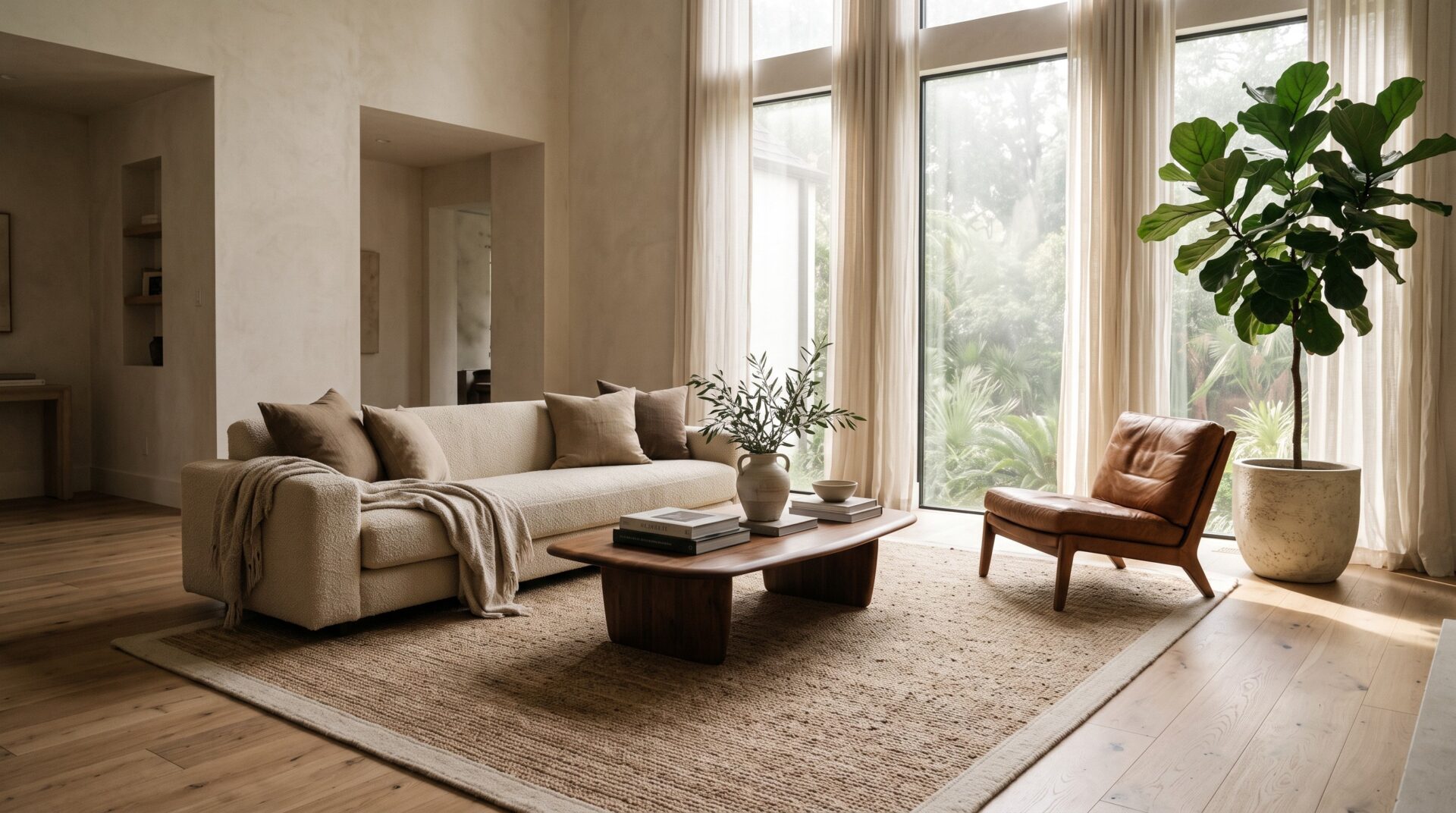
Houston’s air holds more moisture than almost anywhere else in the country, and most homeowners only think about that when it comes to their hardwood floors or their AC bill. Their area rugs get the same treatment, but nobody warns them.
Key Takeaways
- Houston’s average outdoor relative humidity runs 73-78% year-round, peaking near 78% in February and staying above 70% through most of the summer, according to NOAA and Weather Atlas climate data.
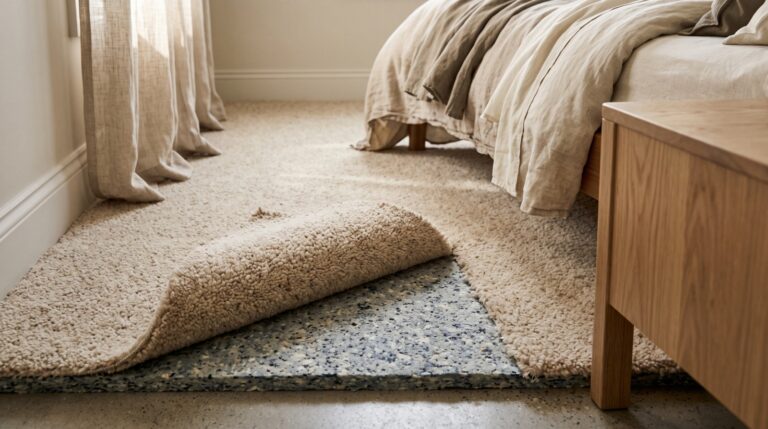
- Trapped moisture beneath a rug, especially in a poorly ventilated spot or over a damp surface, can cause musty odors, mildew, and mold.
- Natural-fiber rugs like jute and sisal perform well in dry, climate-controlled rooms but struggle in areas exposed to wet feet or moisture; solution-dyed synthetic fibers hold up better there.
- Have area rugs professionally cleaned every 12 to 18 months, and only by a cleaner who specializes in rugs specifically, not just wall-to-wall carpet.
- Always vacuum handmade, looped, or fringed rugs on a suction-only setting. A rotating beater bar can pull, fray, or damage the fibers.
Does Houston’s Humidity Really Damage Area Rugs?
Yes, and the mechanism is straightforward. Houston’s average outdoor relative humidity sits at 73-78% year-round, according to NOAA and Weather Atlas climate data, with the wettest stretch running from spring through the end of hurricane season in November. That humidity doesn’t stop at the front door.
Rug specialist Rachel Katz-Rose, who has spent more than a decade in the flooring and rug industry, explains that humidity becomes a real problem “when moisture gets trapped beneath a rug, especially in poorly ventilated areas or over a damp surface.” In a home like Houston’s, where outdoor humidity rarely dips below 70% for half the year, that trapped moisture has more opportunities to become a problem than it would almost anywhere else.
The result, according to Katz-Rose, can be musty odors, mildew, and even mold, developing quietly under a rug that looks perfectly fine on top. A rug in a Tanglewood or Memorial-area home with hardwood or LVP floors sits directly over a hard surface that can trap that moisture underneath, rather than letting it dissipate the way it might through a breathable subfloor.
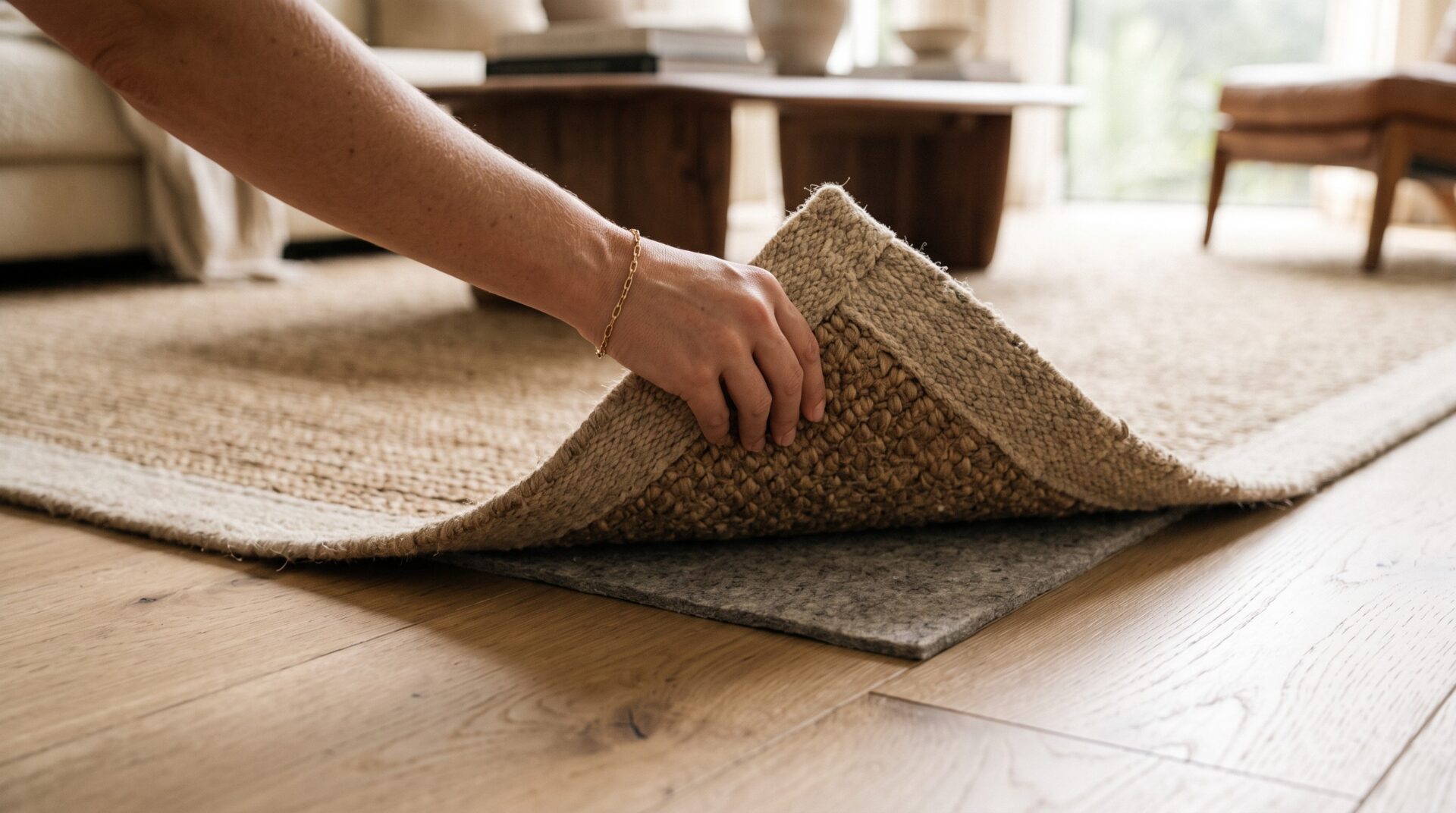
Pro-Tip from the Roberts Carpet & Fine Floors Team: In homes throughout Houston’s older neighborhoods, where humidity has decades to work into flooring and furnishings, we tell customers to lift a rug’s corner and check the floor underneath every few months, especially after a heavy rain event. If the floor feels damp or smells musty, that rug needs to come up and air out before it becomes a bigger problem.
Which Rug Fiber Holds Up Best in Houston’s Climate?
It depends entirely on where the rug lives, not just how it looks. Not every rug fiber handles Houston’s humidity the same way, and the fix starts before you ever bring the rug home.
Katz-Rose puts it simply: every fiber has strengths, and the key is matching the rug to the right space. Natural fibers like jute and sisal add real texture and work beautifully in dry, climate-controlled living rooms. Silk and viscose bring softness and a luxurious sheen that suits formal, lower-traffic rooms. Wool is one of the strongest all-around indoor options, durable and naturally resilient.
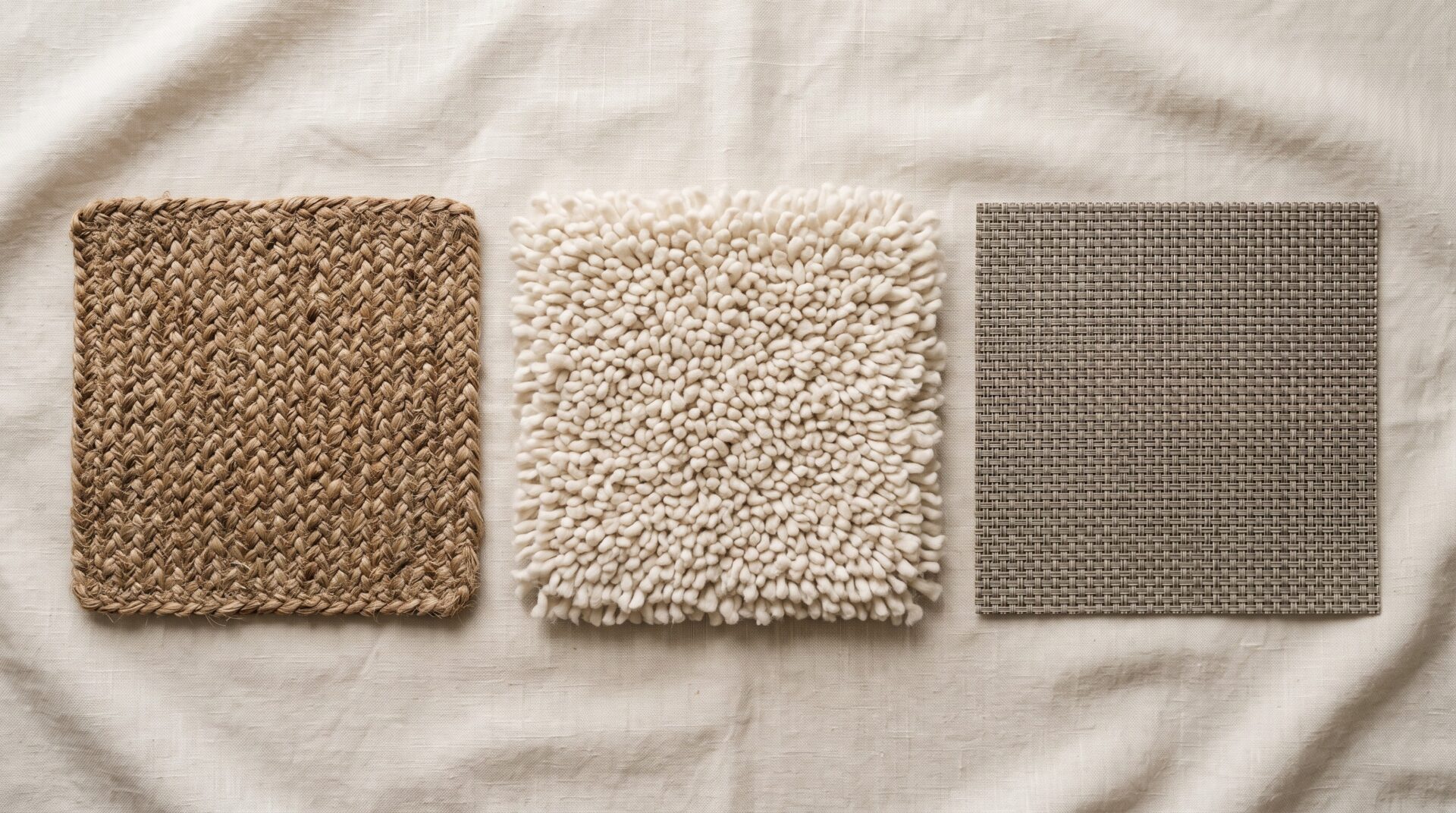
The areas that trip people up are entryways, mudrooms, and any space exposed to wet feet or tracked-in moisture during Houston’s frequent rain events. Katz-Rose recommends indoor-outdoor rugs and solution-dyed synthetic fibers like polypropylene or polyester for those spots. They’re built to handle moisture, fading, and stains while still offering plenty of style, which matters in a city where a sudden downpour is a Tuesday-afternoon occurrence, not a rare event.
Sunlight is the other half of the equation. Katz-Rose notes that if the same section of a rug gets direct sunlight every day, the colors can fade unevenly over time. According to the U.S. Environmental Protection Agency, controlling both moisture and light exposure indoors is a key part of preventing mold growth and material degradation in humid climates. Houston’s long, bright summers make sun exposure a real consideration in west-facing rooms and sunrooms. Rotating the rug periodically and adding window treatments or UV-filtering film helps keep the color even.
What Is the Right Care Routine for a Rug in a Humid Climate?
The routine that protects a rug in a dry climate is not automatically enough for a Houston home.
Vacuuming is the first line of defense, and the setting matters more than people realize. Suction-only vacuuming is the safest choice for any rug, but it becomes non-negotiable for handmade, looped, or fringed rugs. A rotating beater bar can pull, fray, or damage those fibers. Katz-Rose also recommends vacuuming underneath the rug occasionally, not just on top, since grit and debris work their way down into the base over time.
Professional cleaning belongs on a calendar, not a “someday” list. Katz-Rose’s rule of thumb is every 12 to 18 months for a luxury rug, and the cleaner has to specialize in area rugs specifically. Wall-to-wall carpet cleaning and area rug cleaning use different processes, and a cleaner who only knows the former can do real damage to a handmade piece.
A quality rug pad rounds out the routine. It reduces friction, helps prevent slipping, and in a humid climate it also creates a small buffer of airflow between the rug and the floor beneath it, which matters when that floor is hardwood or LVP sitting directly on a Houston slab.
“Great experience with Roberts Carpet, Kirby. Julie and David are fantastic and were so helpful from selection, sizing, to coordinating delivery. Absolutely love my new rug! Delivery team was punctual and meticulous too. Highly recommend.”
Houston customer — Kirby showroom, custom rug purchase
What Rug Care Mistakes Should Houston Homeowners Watch For?
The most common mistake is treating a rug like a “set it and forget it” purchase in a climate that doesn’t allow for that.
Skipping the beneath-the-rug check is the biggest blind spot. A rug can look fine from above while trapping moisture against the floor underneath, especially in a room with limited airflow or in the weeks after a heavy rain event. By the time a musty smell is noticeable, mildew has often already started. If the same spot shows moisture repeatedly, it’s worth having someone check the floor itself, not just airing out the rug again.
The wrong vacuum setting is the second most common mistake, particularly on handmade or fringed rugs that a household vacuum’s default setting can quietly damage over months of regular use. And skipping professional cleaning, or hiring a carpet cleaner who doesn’t specialize in area rugs, can shorten the life of a rug that was built to last for years.
Why Does Where You Buy an Area Rug Matter?
A rug is only as good as the fiber choice behind it, and getting that choice right takes real product knowledge, not a guess based on color and pattern alone.
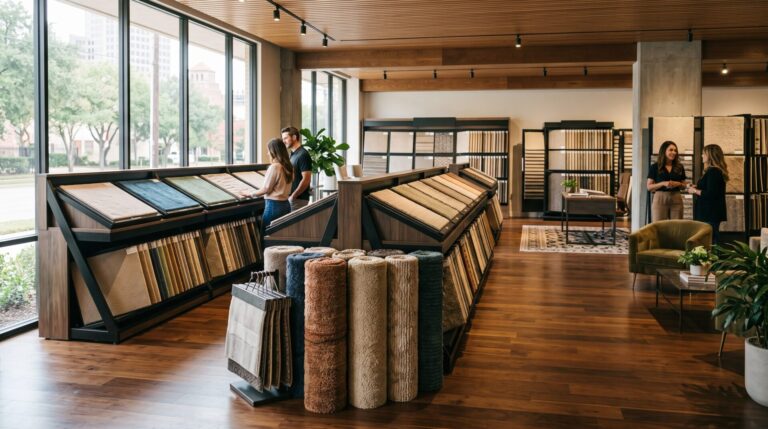
Roberts Carpet & Fine Floors has been serving Houston since 1984, and is Houston’s only Karastan Platinum Dealer and only member of the National Floorcovering Alliance (NFA), a distinction the NFA describes as reserved for fewer than one-tenth of one percent of flooring dealers nationwide. That kind of access means a wider range of wool, natural-fiber, and moisture-resistant synthetic rug options than most local competitors carry, along with a team that can match fiber to room the way Katz-Rose describes rather than selling whatever’s in stock.
This article is based on an expert interview with Rachel Katz-Rose, a rug specialist with more than a decade in the flooring industry, and reviewed for accuracy by the Roberts Carpet & Fine Floors team. Last updated October 7, 2026.
Frequently Asked Questions
Can humidity really cause mold under an area rug?
Yes. Trapped moisture beneath a rug, especially in a poorly ventilated area or over a damp surface, can lead to musty odors, mildew, and mold. In a climate like Houston’s, where outdoor humidity averages 73-78% year-round, that risk is higher than in drier parts of the country.
What is the best rug fiber for a humid Houston entryway?
Indoor-outdoor rugs and solution-dyed synthetic fibers like polypropylene or polyester are the most practical choice for entryways and other moisture-exposed spaces. They’re built to handle moisture, fading, and stains while still offering style, which natural fibers like jute or sisal cannot do as reliably in those conditions.
How often should I have my area rug professionally cleaned?
Every 12 to 18 months, by a cleaner who specializes in area rugs specifically rather than wall-to-wall carpet. The cleaning processes for the two can be very different, and using the wrong process on a handmade rug can cause damage.
Why is my rug fading unevenly?
Direct daily sunlight on the same section of a rug causes uneven fading over time. Rotating the rug periodically and adding window treatments or UV-filtering film helps limit the fading and keeps the color more consistent.
What vacuum setting should I use on a handmade rug?
Suction only. A rotating beater bar can pull, fray, or damage the fibers on handmade, looped, or fringed rugs. It’s important to vacuum underneath the rug occasionally as well, not just the top surface.
Ready to Find the Right Rug for Your Houston Home?
A rug that’s matched to its room, and cared for the way Houston’s climate actually demands, can last for decades instead of a few humid summers. Visit any of our ten Houston-area showrooms, including Houston Central on Kirby, Katy, and The Woodlands, no appointment needed, or call us at (713) 523-0666.
You can also explore our full area rug selection and rug pad options online before you visit.