
- Carpet
What Carpet Actually Costs in Houston — And Where to Spend vs. Save
September 15, 2026
Reviewed for accuracy by the Roberts Carpet & Fine Floors team, Houston’s only National Floorcovering Alliance (NFA) member dealer.
Most Houston homeowners walk into a carpet showroom thinking about one number: price per square foot. That is the wrong starting point. Carpet cost is not a single number — it is a system. The fiber, the pad, the installation, and the maintenance schedule all affect what you spend over the life of the floor. Optimizing for the lowest sticker price on the carpet face, while skimping on the pad or cutting corners on installation, almost always leads to a more expensive floor five years from now.
Understanding where to invest and where to make smart trades is how Houston homeowners get the most from their carpet budget. It is the conversation we have at Roberts Carpet every day — and it starts before we show a single sample.
Stop by any of our nine Houston showrooms and ask us to walk you through the spend vs. save framework before we show you a single product.
Key Takeaways
- The carpet price per square foot is only part of the total cost — pad, installation, and long-term maintenance are equally important variables.
- Spend more on fiber for high-traffic areas: nylon and SmartStrand outperform polyester in living rooms, hallways, and stairs over the carpet’s lifetime.
- Spend more on pad quality: a denser, well-matched pad extends carpet life. Cutting the pad budget is one of the most common and costly mistakes in carpet purchasing.
- Spend more on professional installation: power-stretching, clean seaming, and proper tack-strip placement protect both the carpet and the warranty.
- Save on aesthetics in low-traffic spaces: a mid-range polyester in a guest bedroom that sees minimal traffic is a smart budget decision, not a compromise.
What Actually Drives Carpet Cost in Houston?
Carpet cost is determined by four main variables: the fiber type, the construction, the pad, and the installation. Of these, fiber type is the most important quality driver. Nylon and SmartStrand cost more than polyester, which costs more than wool at the entry level — though premium wool exceeds all of them. Within each fiber category, construction factors like face weight, pile height, and twist level affect cost and performance in ways that are easy to overweight when reading spec sheets.
Houston homeowners sometimes spend a disproportionate amount of time comparing face weight numbers. Face weight — the ounces of fiber per square yard — matters, but only after you have chosen the right fiber. A 40 oz nylon will outperform a 60 oz polyester in a high-traffic hallway every time. Chasing higher face weight within the wrong fiber is one of the most common ways carpet buyers overspend without improving performance.
Pad and installation are where under-investment happens most often. Both are essential to how the carpet performs over its life, and both are frequently treated as fixed costs rather than variables worth optimizing. They are not fixed — and skimping on either one typically costs more over the carpet’s lifespan than the upfront savings justify.
Where Should You Spend More in Your Carpet Budget?
“People come in with a budget and want to know if they can get the best fiber for the lowest price,” says the Roberts Carpet team. “The honest answer is: you can make smart trades, but you cannot skip the fiber, the pad, and the installation without paying for it later. Those three things are where the floor actually lives.”
Fiber — Spend for Performance Where It Matters
For high-traffic areas — living rooms, hallways, stairs, family rooms — fiber quality is the variable with the highest long-term return. Nylon and SmartStrand (triexta) are the performance standard in residential carpet. Both resist crushing, maintain their appearance under daily use, and hold up in Houston’s humidity and foot traffic conditions over the full warranty period.
The built-in stain resistance of SmartStrand is a genuine differentiator for Houston pet and family households where spill response time is not always immediate. Nylon’s range of solution-dyed options offers permanent color and stain protection that does not wear off with cleaning. For both, the upfront investment in the right fiber pays dividends every year the carpet is in place.
Pad — Spend for Density, Not Thickness
Pad is the most consistently under-budgeted element of a carpet purchase. A better pad at the right density extends carpet life, improves underfoot comfort, and protects the subfloor. It also affects whether the carpet performs to its warranty specifications.
“The place where people under-invest is always the pad,” says the Roberts Carpet team. “A better pad on a mid-grade carpet almost always outperforms a cheaper pad on a premium carpet five years in.”
The guidance: do not cut the pad budget to save money on the carpet face. A denser, well-matched pad in the right thickness range for your carpet style is one of the best investments in the total flooring system. In Houston’s slab-on-grade homes, where there is no subfloor flex, the pad is the only cushion layer — and it needs to earn that role.
Installation — Spend for Skill, Not Just Speed
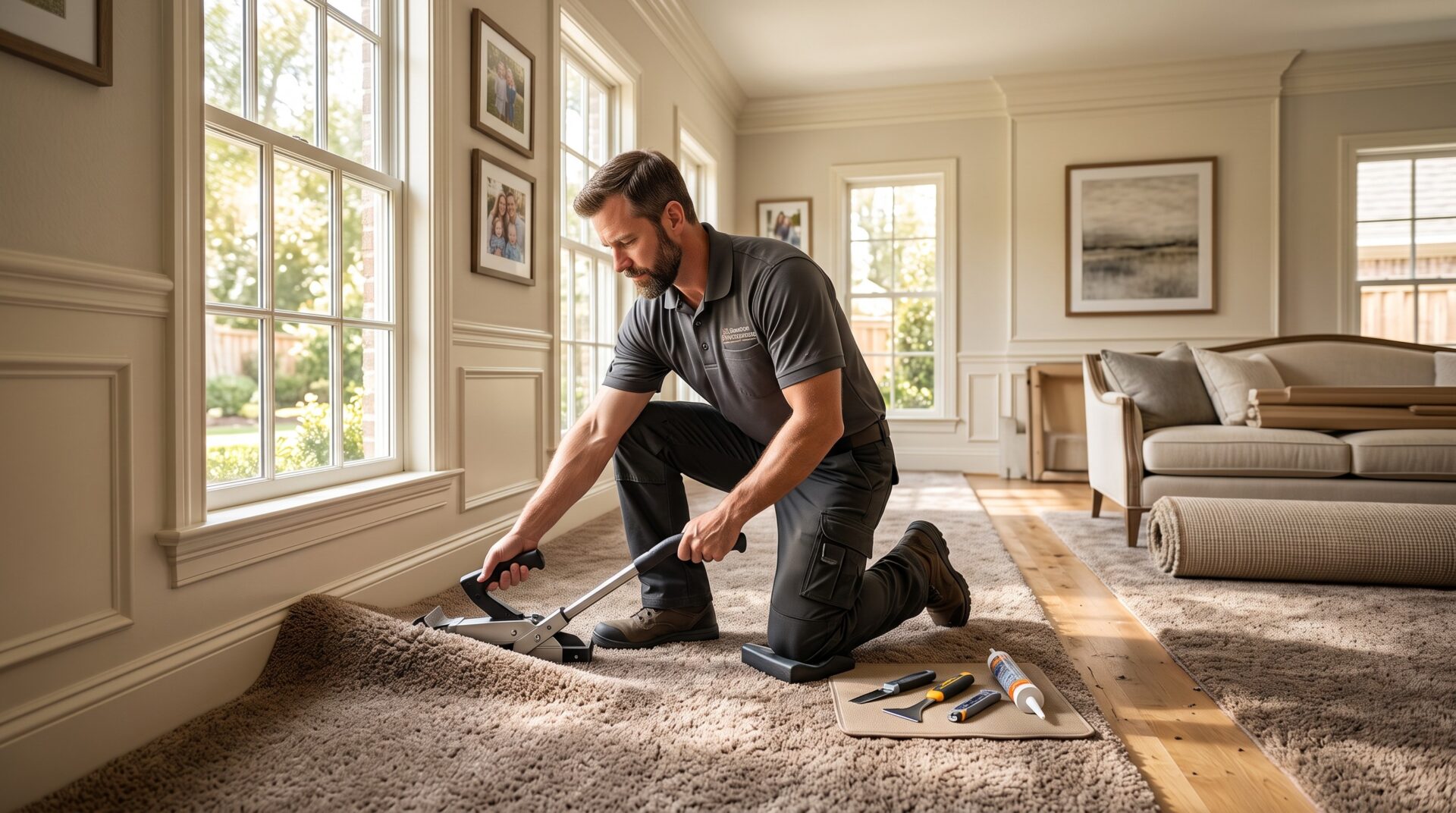
Professional installation is where the carpet’s performance is either validated or undermined. Carpet that is not power-stretched correctly develops wrinkles and loose areas over time. Seams that are not properly joined show wear faster. On stairs, incorrect anchoring creates safety hazards and warranty voids.
Roberts Carpet uses professional installation crews trained to manufacturer specifications. As Houston’s only NFA member dealer, our installation standards are tied directly to the warranty programs of the brands we carry. That is not a marketing claim — it is a practical guarantee that the installation method matches what the manufacturer requires for warranty coverage.
Carpet Budget: Where to Spend and Where to Save
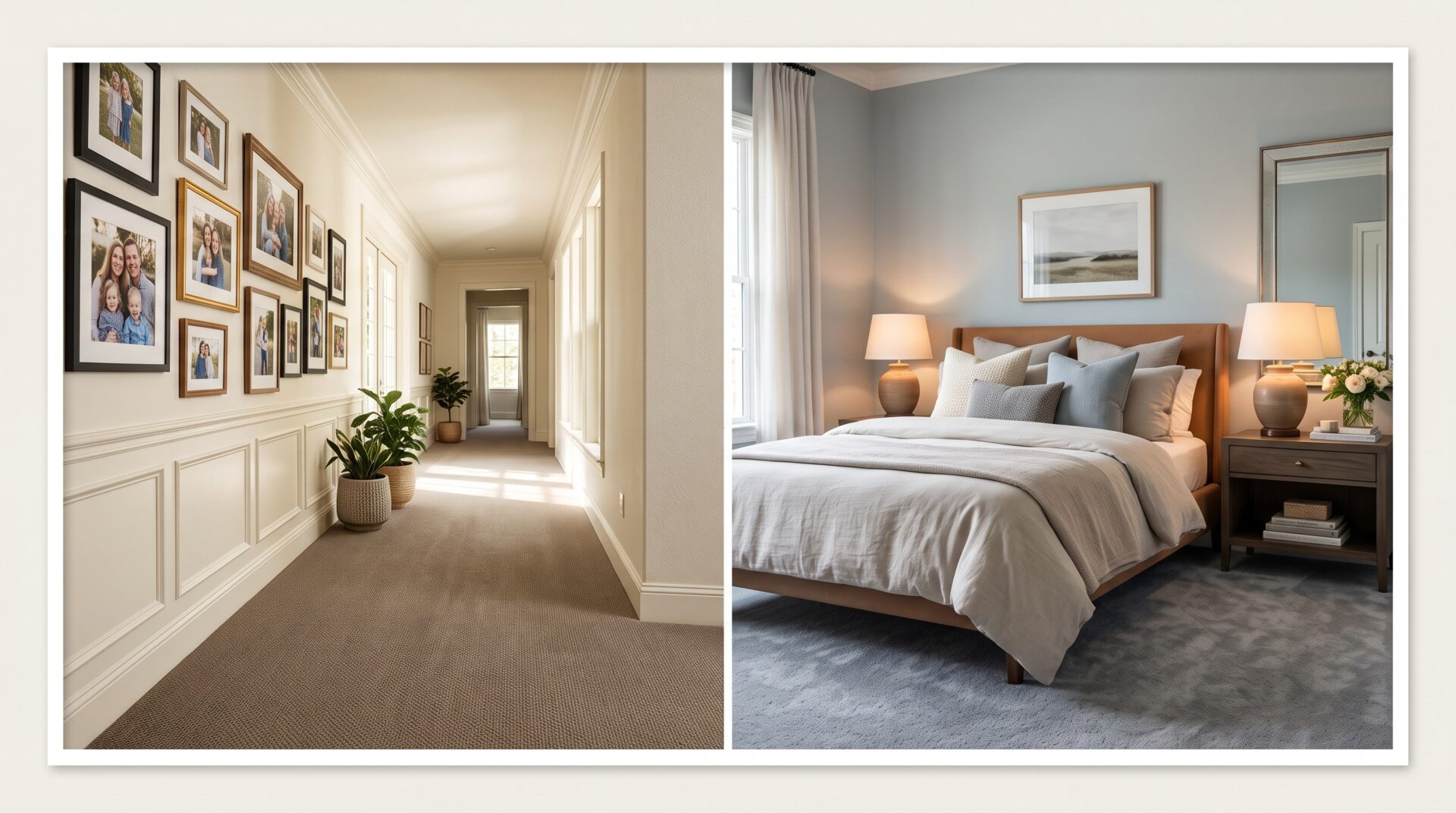
| Decision | Spend More | Smart Save |
|---|---|---|
| Fiber — High traffic (living room, hallway, stairs) | Nylon or SmartStrand | Avoid cutting to polyester here |
| Fiber — Low traffic (guest room, closet) | Mid-range polyester is appropriate | A lower price point is reasonable |
| Pad — All areas | Correct density for carpet style | Do not cut pad quality to save on carpet |
| Installation | Power-stretched professional crew | Do not reduce scope to cut labor cost |
| Aesthetics — Low traffic areas | Mid-range style within right fiber | Simpler textures and colors save money |
| Face weight / specs | Right fiber first, then optimize | Do not chase specs in the wrong fiber |
Where Can You Save Without Sacrificing Quality?
Smart carpet budget management is about matching the product to the performance requirement — not minimizing cost everywhere or maximizing it everywhere. The goal is to invest in the elements that determine long-term performance and make appropriate trades in the areas that do not.
“The place where we see people over-invest is in chasing specs — face weight, twist level, fiber ounces,” says the Roberts Carpet team. “Those numbers matter up to a point, but past a reasonable threshold they are mostly marketing.”
Lower-Traffic Areas
Guest bedrooms, home offices, and other rooms that see limited daily use do not require the same fiber durability as living rooms or hallways. A polyester carpet in a guest bedroom that is used occasionally will perform well at a lower price point without compromising the overall flooring experience. The trade-off: keep the pad quality consistent. Saving on pad in a low-traffic room can still shorten the carpet’s life and make the space feel less comfortable underfoot.
Aesthetics Within the Right Fiber
Within any given fiber category, there is a wide range of styles and price points. A nylon carpet at a mid-range face weight in a simpler texture will often perform comparably to a premium nylon at a higher face weight with a more complex construction — at a meaningfully lower cost. Once you have chosen the right fiber for the space, you can optimize on aesthetics and construction within that fiber without sacrificing performance.
Spec-Chasing
Resist the temptation to buy a polyester or lower-performance fiber at a very high face weight as a substitute for a performance fiber at a moderate weight. The spec number is not the performance — the fiber is. A well-chosen mid-range nylon at a sensible construction is a better long-term investment than a high-spec polyester at a premium price.
Pro-Tip from the Roberts Carpet Team: For Houston homeowners doing a whole-home carpet replacement — common in Katy, Pearland, and The Woodlands new-build markets — we suggest a tiered approach. Invest in performance fiber (nylon or SmartStrand) with a high-density pad for the stairs, hallways, and main living areas. Use a quality polyester with a good pad for secondary bedrooms. Do not vary the installation quality — every room deserves professional power-stretching regardless of the fiber. This tiered approach typically delivers a better total floor for a tighter budget than treating every room the same.
What Is the Total Cost of Carpet Ownership in Houston?
The purchase price and installation cost are only part of the total cost of owning carpet over its life. Houston homeowners planning a carpet budget should also factor in two ongoing costs: professional cleaning and eventual replacement.
Most major carpet warranties require professional cleaning using hot water extraction approximately every 18 months. Keeping receipts for every cleaning is essential — without them, warranty claims cannot be filed. Building this cost into the carpet’s total ownership budget is not optional; it is part of what it costs to maintain the floor and keep the warranty valid.
Replacement timing is directly related to the decisions made at the initial purchase. A carpet installed with the right fiber, the right pad, and professional installation — and maintained on the required cleaning schedule — will outlast a carpet where any of those elements were compromised, sometimes by years. The cheapest carpet installed today is often the most expensive flooring decision over a decade.
“From sale through coordination and installation, this was the finest carpeting experience in 40+ years (6 homes). Courteous. Professional. Timely. Great communication. What more needs to be said?”
Houston Customer — Premium Carpet Installation
Why a Turnkey Estimate From Roberts Carpet Gives You the Full Picture
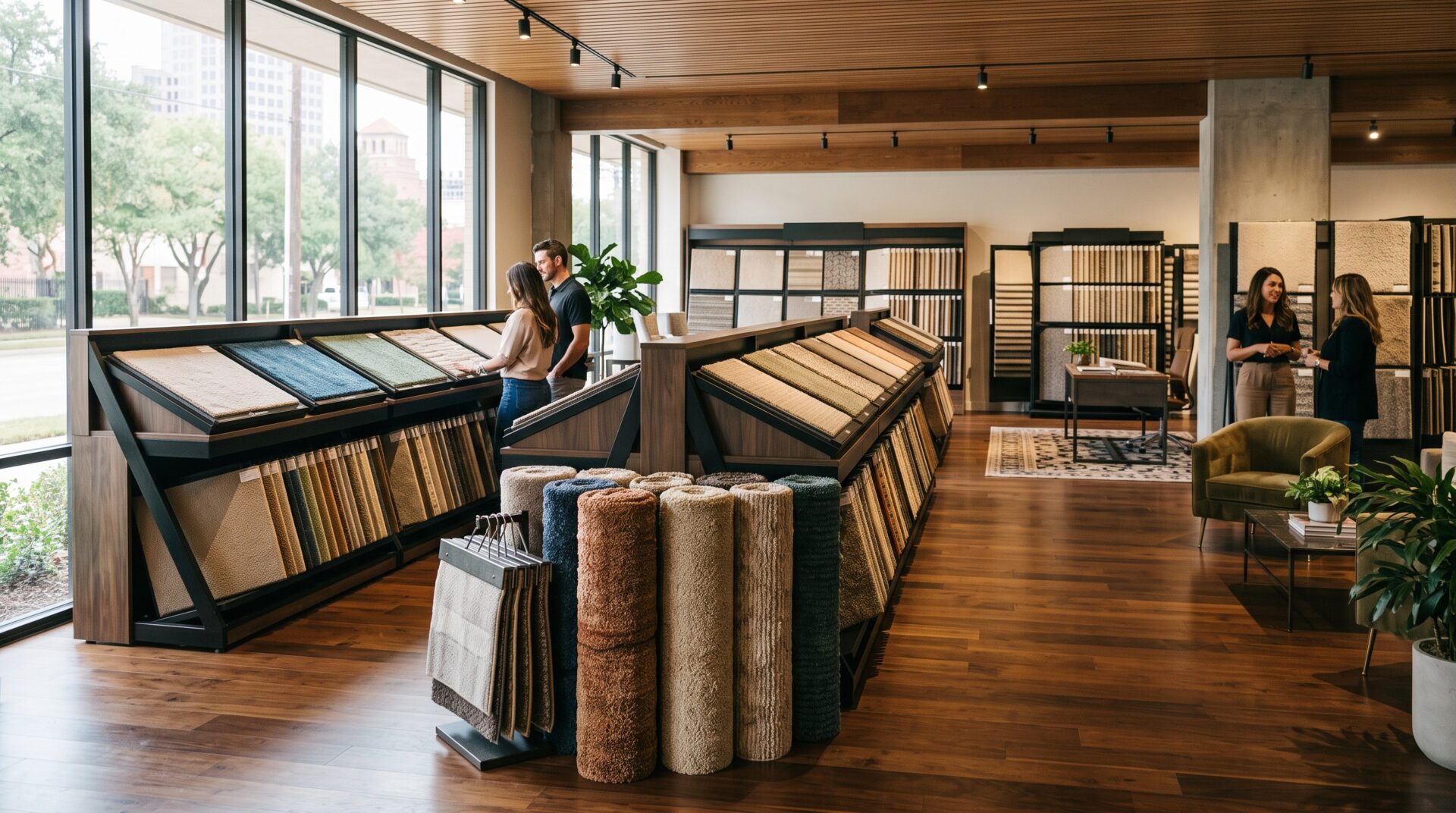
The 48-hour complimentary turnkey estimate at Roberts Carpet is designed to give Houston homeowners the complete cost picture before committing to anything. When our team measures your space and reviews the flooring plan, we present the full system cost — carpet, pad, and installation — not just the face price per square foot. That transparency is what NFA membership means in practice: accountable pricing from a dealer with direct manufacturer relationships.
Roberts Carpet has served Houston since 1984. As the city’s only NFA member dealer, we carry brands with strong warranty programs and transparent performance specifications — and we will tell you where you can save and where you should not.
View our full carpet selection or request your complimentary estimate online. You can also try our room visualizer to explore styles before visiting any of our nine showrooms.
Start With the Right Conversation — Not the Lowest Sticker Price
When you visit Roberts Carpet, we will start with how you live in the space — not with the product. That conversation is how we get the fiber, pad, installation, and budget aligned before a single sample is pulled. Walk-ins are welcome at all nine Greater Houston showrooms, or book your estimate online for a turnkey quote within 48 hours. Houston Central: 3404 Kirby Drive, (713) 523-0666.
This article is based on an expert interview with a Roberts Carpet & Fine Floors flooring specialist and reviewed for accuracy by the Roberts Carpet & Fine Floors team, Houston’s only National Floorcovering Alliance (NFA) member dealer. Last updated September 15, 2026.
Frequently Asked Questions
What drives carpet cost in Houston?
Carpet cost in Houston — and everywhere — is driven by four main factors: the fiber type, the construction style (face weight, pile height, twist), the pad, and the installation. Fiber is the biggest quality differentiator. Nylon and SmartStrand cost more than polyester; wool costs more than all three. Pad and installation are often underestimated in the total budget but have a major impact on long-term performance.
Where should I spend more in my carpet budget?
Spend more on three things: the fiber (nylon or SmartStrand for high-traffic areas), the pad (density matters more than thickness — do not buy the cheapest pad available), and the installation (power-stretched by a skilled crew). These three components determine how the carpet performs over its life. Cutting corners on any of them typically leads to early replacement costs that dwarf the original savings.
Where can I save in my carpet budget without sacrificing quality?
You can reasonably save on aesthetic choices in lower-traffic spaces. A polyester carpet in a guest bedroom that sees minimal traffic will perform well at a lower price point than nylon. You can also save by choosing a mid-range style within a strong fiber category — the difference between a 40 oz nylon and a 60 oz nylon is not proportional to the price difference in most residential applications. Buy the right fiber and a mid-range construction before buying a premium construction in the wrong fiber.
Does more face weight mean better carpet?
Not always. Face weight — the weight of the fiber per square yard — affects density and feel, but higher face weight does not automatically mean better performance. The fiber type matters more. A 40 oz nylon carpet will typically outperform a 60 oz polyester carpet in a high-traffic area. Buy the right fiber for the space first, then optimize within that fiber category.
Does carpet installation cost matter in Houston?
Yes — installation quality has a direct impact on carpet performance and warranty coverage. Carpet that is not power-stretched correctly during installation develops wrinkles and loose areas over time. Proper power-stretching, correct pad placement, and clean seaming all affect how the carpet wears and whether warranty claims can be honored. Cutting the installation budget often costs more in the long run.
What is the total cost of carpet in Houston beyond the price per square foot?
The total cost of carpet includes the carpet itself, the pad, installation labor, furniture moving if required, and disposal of the old carpet. For Houston homeowners, professional maintenance costs — required every 18 months to maintain warranty coverage — should also be factored into the total cost of ownership over the carpet’s life.