
- Blog
How to Choose the Right LVP Thickness for Your Houston Home
June 25, 2026
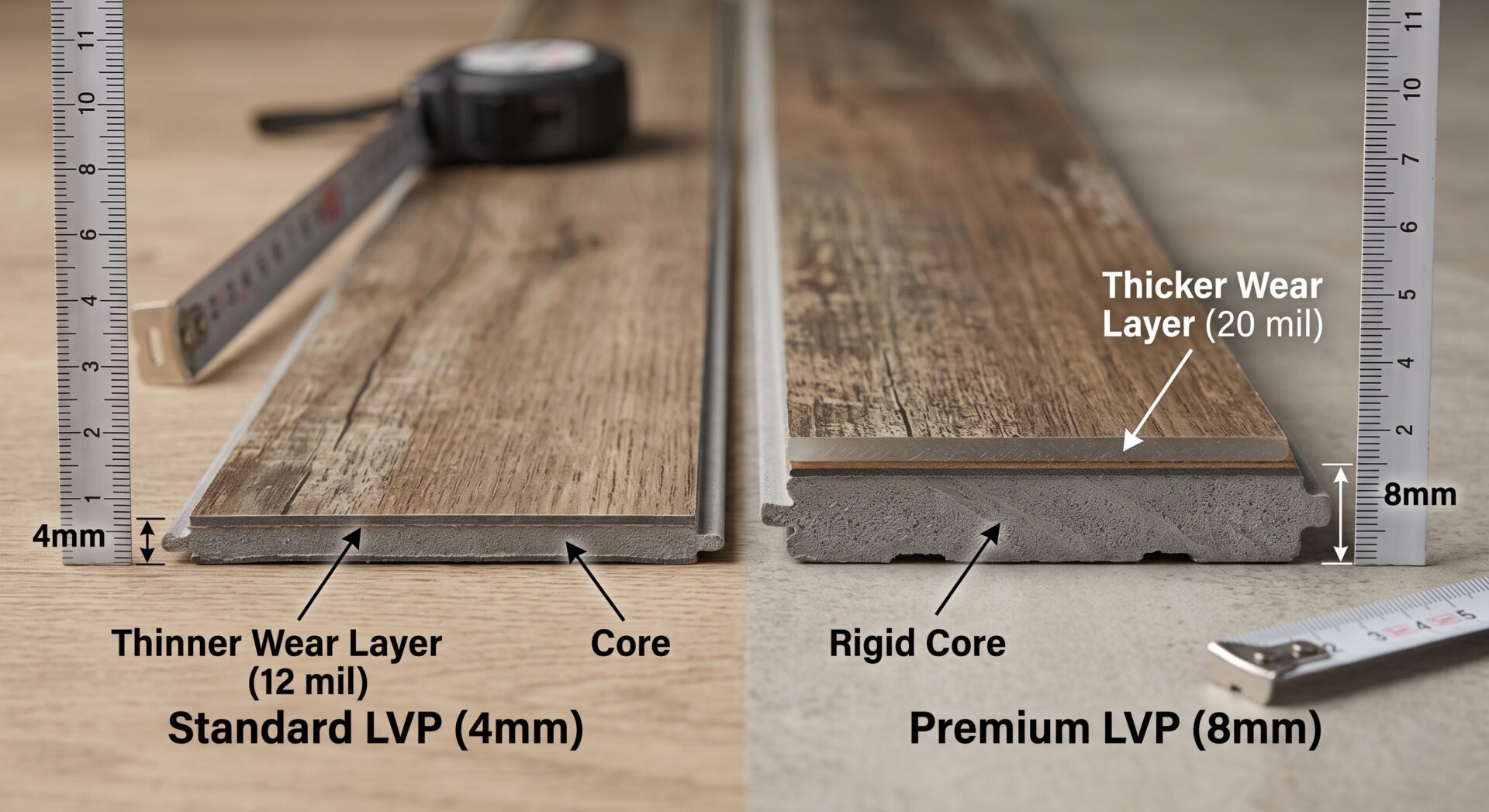
Walk into any flooring showroom and you’ll find luxury vinyl planks in what feels like a hundred different options. Different colors, different textures, different species imitations — and different thicknesses measured in millimeters that most homeowners have never had reason to think about. Four millimeters. Six. Eight. Twelve. What does it mean, and does it actually matter?
It matters more than the marketing suggests. Choosing the wrong thickness for your space and lifestyle is one of the most common — and most costly — mistakes Houston homeowners make when buying hard surface flooring.
Why Thickness Isn’t Just a Spec — It’s a Performance Decision
Luxury vinyl is not a single product. It’s a category that includes several different construction types — LVT (Luxury Vinyl Tile), SPC (Stone Plastic Composite), and WPC (Wood Plastic Composite) — each engineered for different performance profiles.
Within each type, thickness affects two things that matter to your floor’s long-term performance: how it handles deflection and how long its wear layer survives.
Deflection is the technical term for what happens when a floor flexes under load. In a large open living room, your subfloor spans a greater distance between support points. When weight is applied — furniture, foot traffic, a heavy appliance — the subfloor flexes slightly. A thinner floor can telegraph that flex, creating micro-stress on the locking joints over time. A thicker, more rigid product absorbs and distributes that load more effectively.
The wear layer is the clear top coat on the surface of the plank. It’s what stands between your floor and scratches, scuffs, and everyday wear. Thicker products generally have thicker wear layers — and in high-traffic rooms, that difference is the difference between a floor that looks great for fifteen years and one that shows its age in five. You can learn more about protecting your investment at our LVP care & maintenance guide.
The Room-Size Rule of Thumb
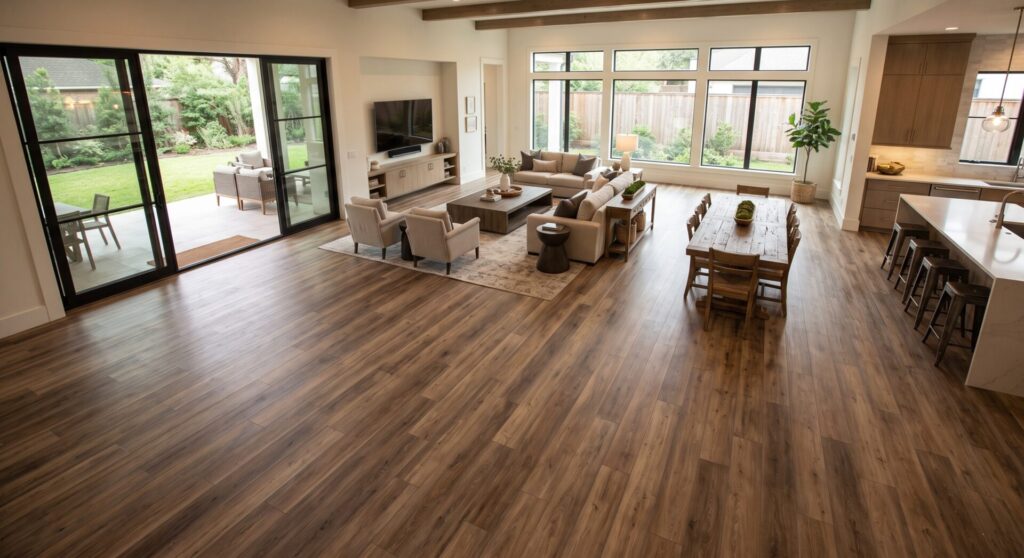
A practical guideline from experienced flooring professionals: the larger the room, the thicker the floor should be. This isn’t an arbitrary preference — it’s rooted in how deflection works across a span.
In smaller spaces like bathrooms, laundry rooms, or a guest bedroom, a thinner SPC product in the 4–5mm range can perform well. The room spans are short, traffic is light, and the subfloor has less opportunity to flex. For these applications, paying for premium thickness isn’t necessary.
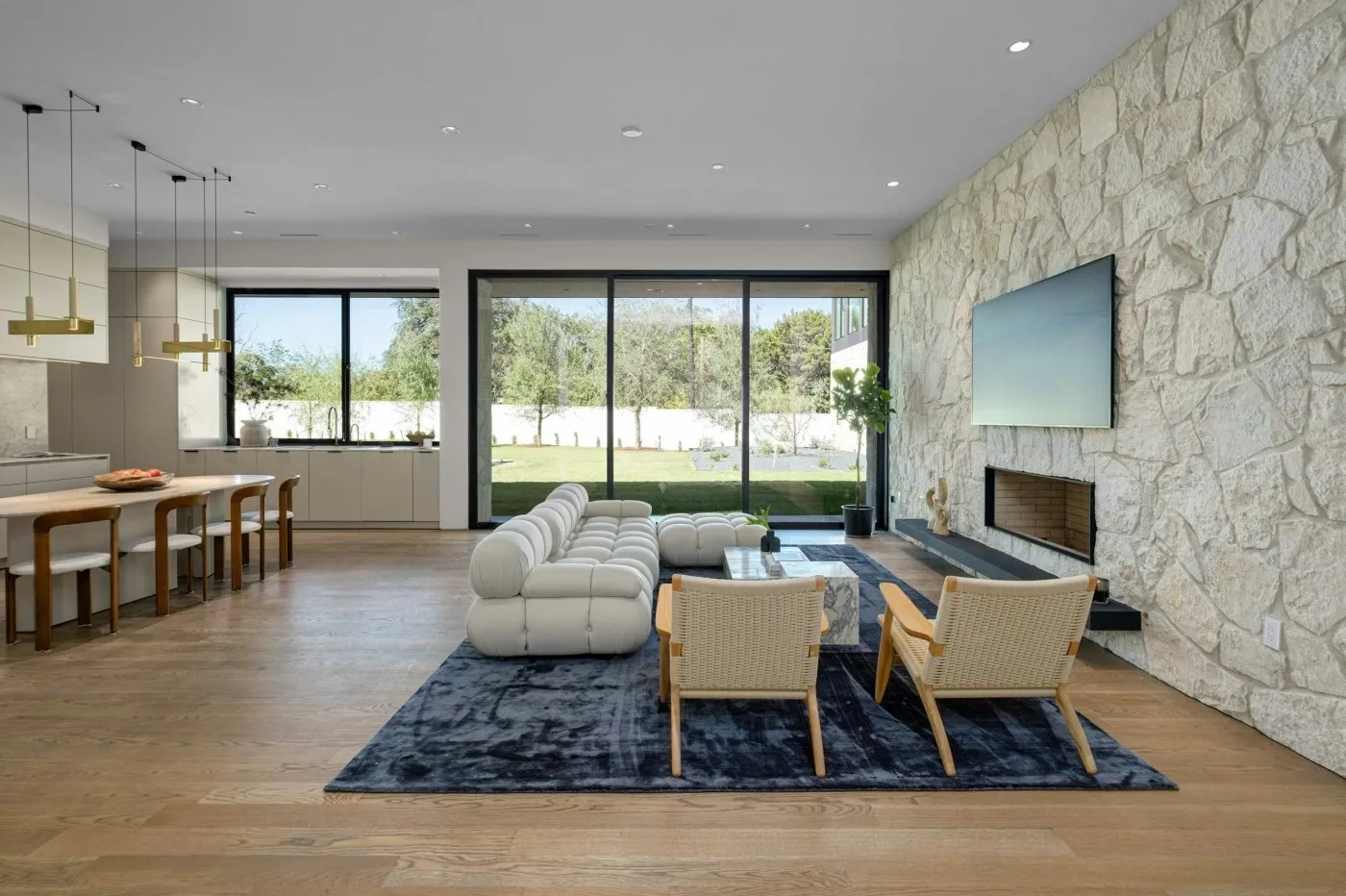
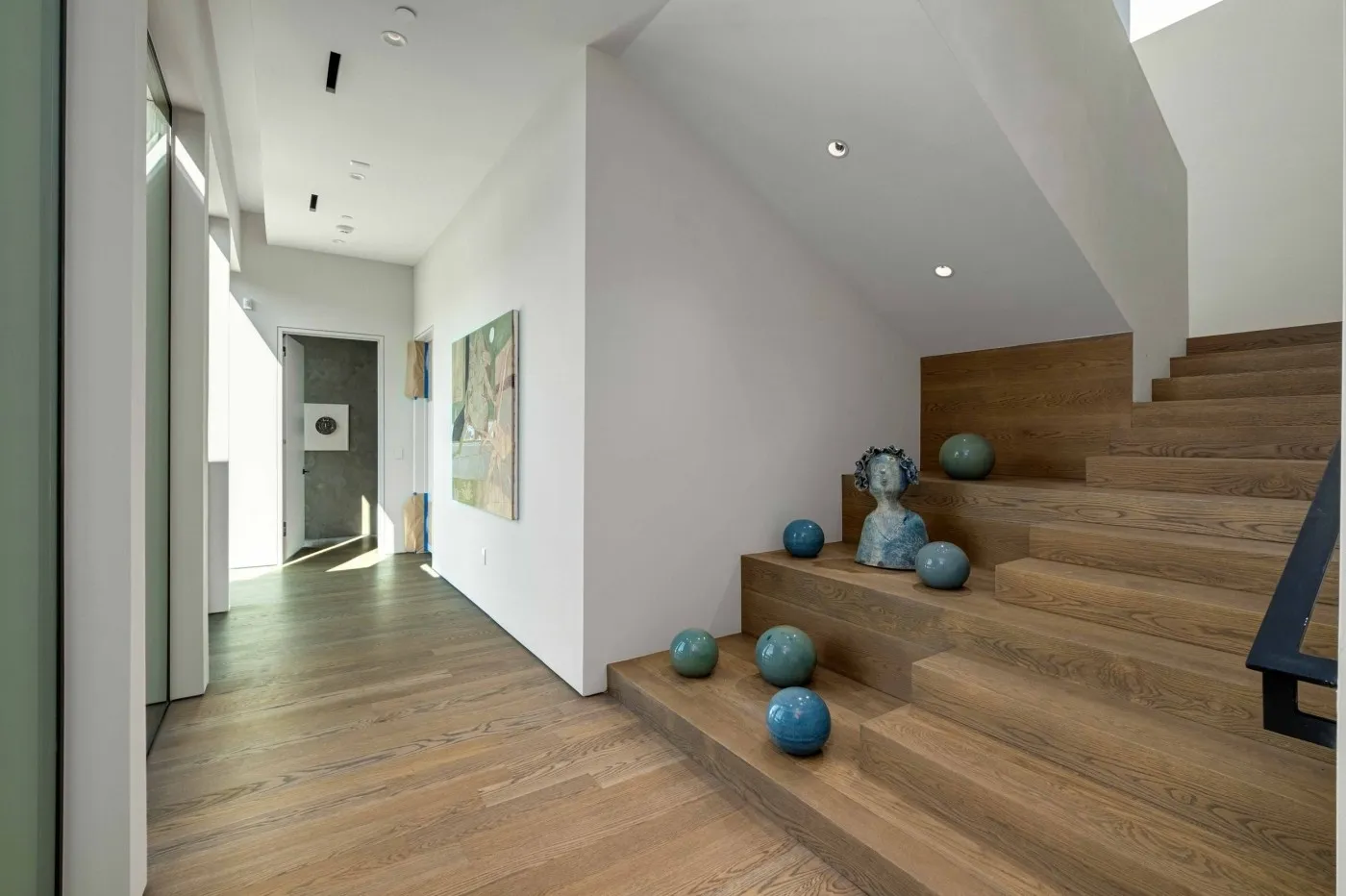
In main living areas — open-plan great rooms, dining rooms, long hallways — the calculus changes. These spaces have greater floor spans, more varied traffic, and often more furniture weight. An SPC or WPC product in the 6–8mm range is a more appropriate starting point. For rooms with rolling loads — office chairs, wheelchairs, appliances on wheels — sub-5mm products are likely to fail regardless of the brand name on the box.
High-Traffic Areas: Where Wear Layer Thickness Pays Off
The wear layer is typically measured in mils (thousandths of an inch). Most builder-grade LVP carries a 6–8 mil wear layer. Mid-grade products typically run 12 mil. Premium and commercial-grade products can reach 20 mil or higher.
For a Houston home with kids, pets, or significant daily foot traffic through the main living areas, a 12 mil wear layer is a reasonable minimum. For a home with rolling office chairs or a household that entertains frequently, 20 mil is worth the investment. For a guest bedroom that sees occasional use, 6–8 mil is perfectly adequate.
The key is matching the wear layer to the actual use of the space — not to the aspirational use described in the manufacturer’s brochure.
SPC vs. WPC: Which Construction Suits Houston?
Both SPC and WPC are rigid-core luxury vinyl products, but they’re built differently and perform differently in Houston’s climate.
SPC (Stone Plastic Composite) has a denser, harder core. It resists denting from heavy furniture and performs better under high mechanical loads like rolling traffic. It also tends to be dimensionally more stable, which is an advantage in Houston where humidity swings between seasons can cause some flooring materials to expand and contract noticeably.
WPC (Wood Plastic Composite) has a softer, more cushioned core that many homeowners find more comfortable underfoot — closer to the feel of engineered hardwood than rigid stone composite. WPC is an excellent choice for bedrooms and living areas where comfort underfoot is a priority and rolling mechanical loads are not a factor.
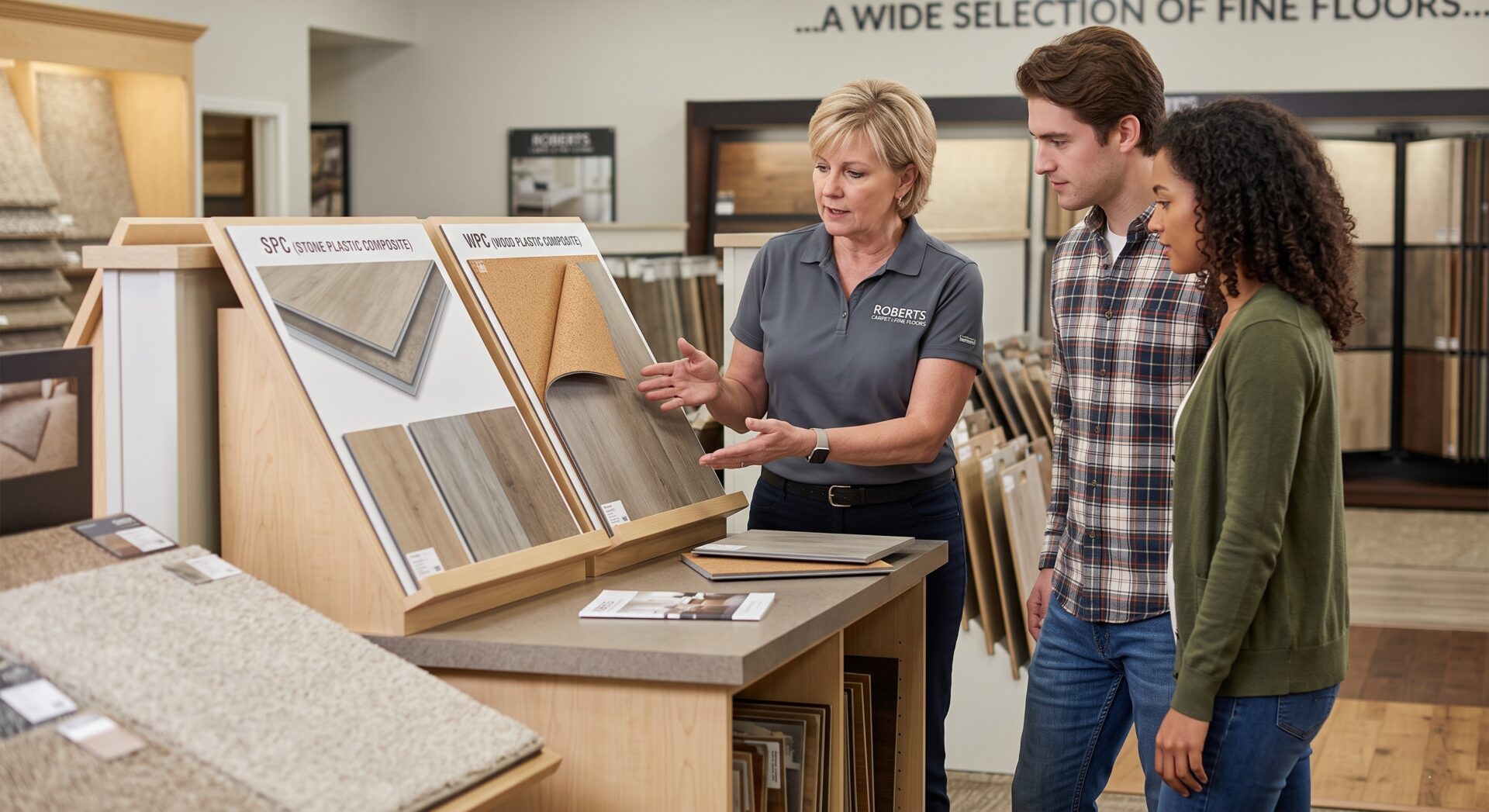
Neither is universally better. The right choice depends on your specific room, your lifestyle, and your subfloor conditions. The team at Roberts Carpet & Fine Floors can help you evaluate both against your actual home conditions — not just the spec sheets.
When Scratch Resistance Matters More Than Character
One more dimension of the thickness conversation: when scratch resistance is your top priority, engineered products like SPC and high-quality laminate will outperform natural wood every time.
Wood floors are valued for their unique, natural character — the grain variation, the occasional beauty mark, the patina that develops over years. Customers who love wood flooring are typically not looking for a scratch-proof surface. They’re looking for something alive, something that ages gracefully and looks different from every other house on the street.
If scratch resistance is non-negotiable — maybe because of large dogs, kids in cleats, or simply a preference for pristine floors — a well-chosen SPC product with a premium wear layer will serve you better than wood in those specific areas. Visit any of our ten Houston-area showrooms or explore our luxury vinyl collection to find the right match.
Frequently Asked Questions
What thickness LVP should I buy for a Houston living room?
For a main living area with normal residential traffic, a 6–8mm SPC or WPC product provides a good balance of performance and value. If the room has rolling loads such as office chairs, wheelchairs, or appliances, move toward the thicker end of that range or consider a premium rigid-core product.
Does a thicker LVP always mean a better product?
Not always — but it generally means a more appropriate product for demanding applications. Thickness affects deflection resistance and typically correlates with a thicker wear layer. For low-traffic secondary spaces, a thinner product at a lower price point performs perfectly well.
What’s the minimum LVP thickness for high-traffic areas?
For high-traffic residential use, a product under 5mm is likely to show wear prematurely and may struggle with deflection in larger rooms. A 6–8mm product with at least a 12 mil wear layer is a more appropriate baseline for kitchens, living rooms, and hallways.
Is SPC or WPC better for Houston’s humidity?
Both perform well in Houston’s humid climate — one of the genuine advantages of rigid-core luxury vinyl over wood or laminate. SPC tends to be dimensionally more stable in extreme humidity swings, while WPC offers more comfort underfoot. Your installer or our team at Roberts Carpet can help you choose based on your specific space.
Can I put thin LVP in a room with a rolling office chair?
A sub-5mm SPC product will likely fail under the repeated mechanical load of a rolling office chair. For home office spaces, choose a minimum 6mm product with a 20 mil wear layer, or consider a chair mat to protect the floor surface.
Choosing the right LVP thickness is one part of getting your floors right the first time. Stop by any Roberts Carpet & Fine Floors showroom across Greater Houston, or book a complimentary estimate and let our team match product to your lifestyle — not just millimeters to marketing copy.