
- Blog
Why Professional Flooring Installation Matters More Than You Think
June 18, 2026
You’ve seen the ads. A smiling homeowner clicks a few planks together, stands back to admire the results, and the job looks effortless. Big-box stores have spent years telling Houston homeowners that installing hard surface flooring is a weekend project anyone can tackle. Buy the floor, download the instructions, and you’re done.
It’s a compelling pitch. It’s also responsible for a lot of ruined floors.
What Big-Box Stores Don’t Tell You
The rise of locking-system hard surface flooring — the kind that snaps together without glue or nails — was a genuine innovation. It simplified installation enough that DIY became theoretically possible for some homeowners in some situations. But somewhere between the factory and the showroom floor, “possible for some” became “easy for everyone,” and that’s where the trouble started.
Here’s what the ads leave out: installing hard surface flooring is a construction project. It requires a trained eye, proper tools, and the ability to assess conditions that most
homeowners have never thought about — and wouldn’t know how to address if they did. The locking system on your planks is the least complicated part of the job.
The Hidden Complexity of a “Simple” Floor Install
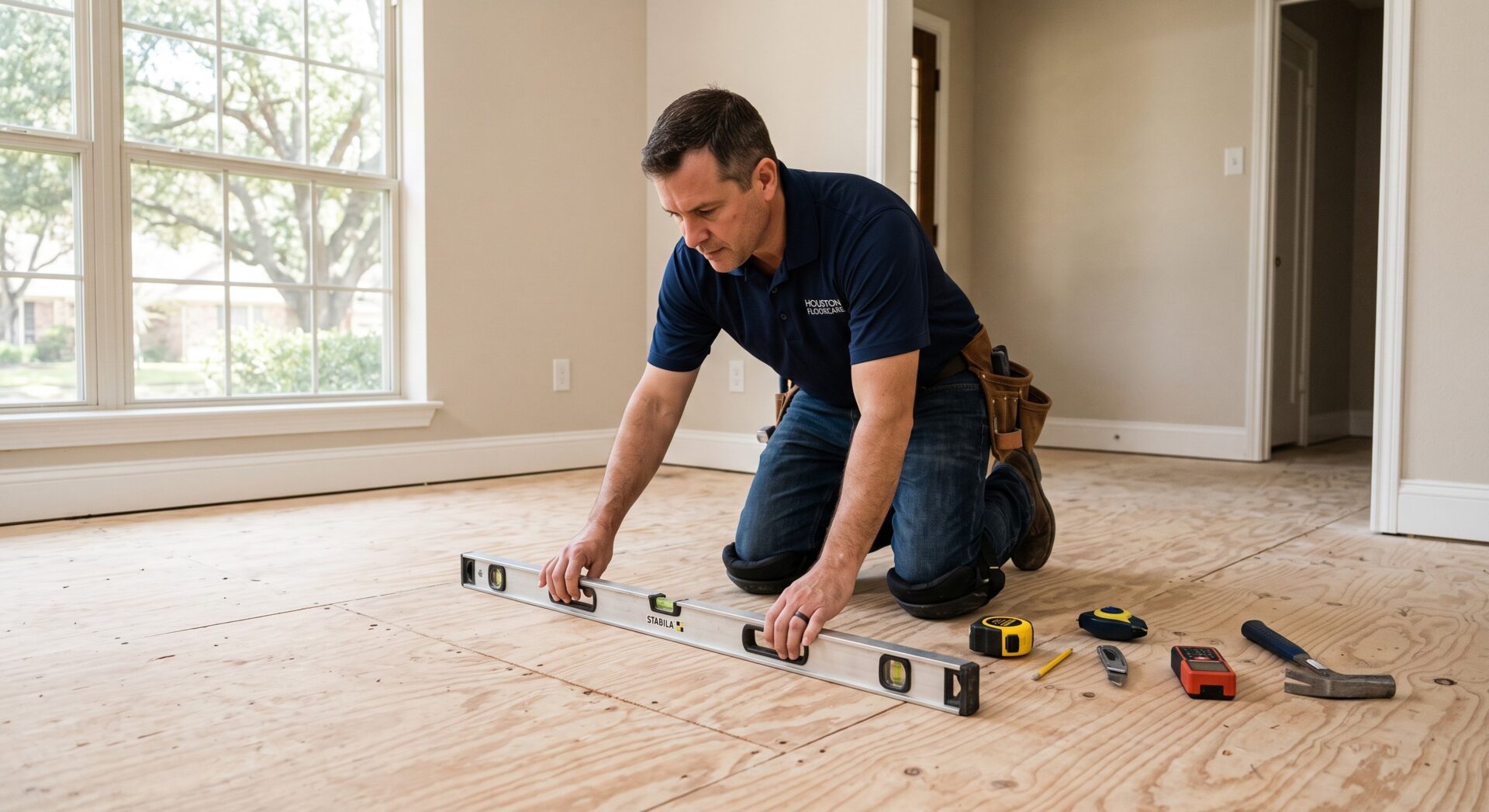
Professional flooring installers assess job site conditions before a single plank goes down. That assessment covers things most DIYers never consider:
Deflection. In larger rooms especially, subfloors can flex under load. A thicker, more rigid product can help, but if the subfloor itself has deflection issues, no amount of premium flooring will fix it. A professional recognizes deflection and addresses it before installation. A homeowner following YouTube instructions typically does not.
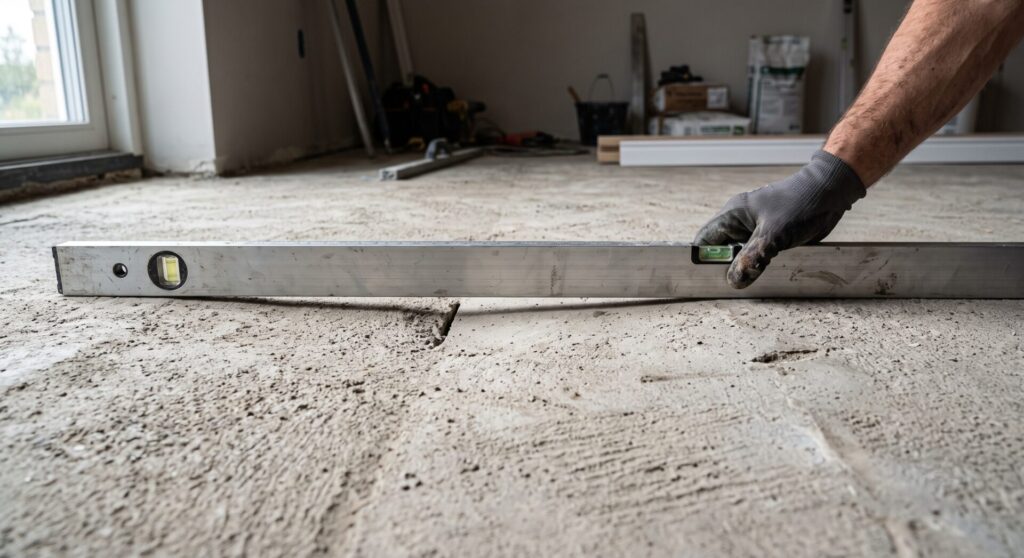
Flat vs. level. These sound like the same thing, but they aren’t — and the difference matters enormously. A level floor is one where every point is at the same height relative to the earth. A flat floor is one where there are no humps, dips, or waves in the surface. Achieving perfectly level is nearly impossible in any existing home, because houses move and settle over time. What a professional installer achieves is flat — a surface the flooring can lay on without rocking, gapping, or stressing the locking joints.
Height transitions. Hard surface flooring adds height to your floor — typically a quarter inch to half an inch depending on the product. In an existing home, that means baseboards need to be adjusted, door jambs need to be undercut, and transitions to adjacent flooring or tile need to be managed carefully. Getting these details wrong doesn’t just look bad; it can compromise the floor’s ability to expand and contract with Houston’s temperature and humidity swings.
Product limitations. Not every hard surface product is suitable for every application. Stairs, for example, require specific products and installation methods. Professionals know which products work on stairs and which ones don’t. DIYers often find out the hard way after the planks are already cut.
The Subfloor Is Everything
In Houston, this point deserves its own section.
The subfloor is the foundation your finished floor sits on. It needs to be sound — structurally solid, free of soft spots, and properly prepared. And it needs to be flat, not because perfection is possible, but because excessive variation in the subfloor surface will show through in the finished floor, stress the locking joints over time, and ultimately shorten the life of your investment.
Houston’s clay soils create a specific subfloor challenge. Expansive clay beneath slabs absorbs and releases moisture seasonally, which causes the slab to move slightly over time. In homes built on pier-and-beam foundations — common in older Houston neighborhoods like Meyerland, the Heights, and West University Place — the subfloor can develop soft spots, squeaks, and variations that compound over time. A professional installer identifies these issues and corrects them before installation
begins. That might mean adding blocking, using leveling compound, or recommending that a structural issue be addressed before any flooring goes down.
Skipping that assessment doesn’t save money. It transfers the cost downstream, usually in the form of a failed floor and the expense of doing the job twice.
Why Trusting Your Retailer and Your Installer Both Matter
A professional installation is only as good as the professional doing it. That means the retailer you buy from has a responsibility too: to connect you with qualified installers who follow manufacturer recommendations and meet industry standards.
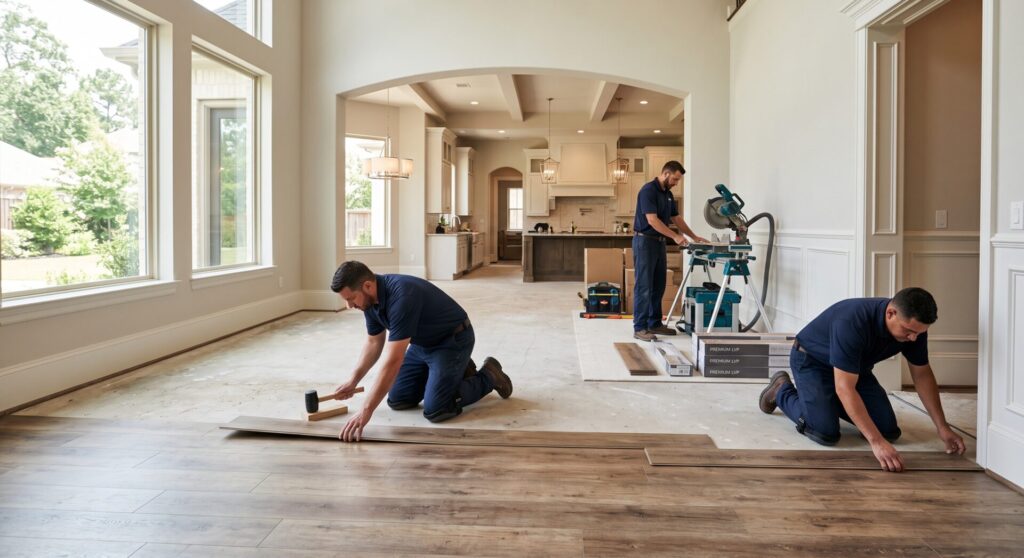
At Roberts Carpet & Fine Floors, our installation services use experienced crews who understand Houston’s specific installation challenges — from managing moisture conditions before a glue-down installation to properly prepping slab foundations for floating floors. We don’t hand you a floor and a phone number. We manage the project from product selection through final installation.
As a member of the National Floorcovering Alliance, we’re also accountable after the job is done. NFA dealers stand behind their installations. If something goes wrong — whether it’s a manufacturer issue or an installation concern — we work to make it right. That kind of accountability is what separates a trusted flooring partner from a big-box transaction.
“Roberts just redid our floors in our entire house and it was a 5-star experience from start to finish! From choosing the floor to installation and touch ups — nothing but praise for the crew.” — Lauren S., Houston area
What to Ask Before Any Flooring Installation
Whether you’re working with Roberts Carpet or evaluating other options, these questions protect your investment:
Will you assess the subfloor before installation begins? Any professional installer should inspect the subfloor for flatness, moisture, and structural soundness before quoting or starting work.
Are your installers trained on this specific product? Different flooring types require different techniques. Confirm your installer has experience with the specific product you’ve chosen.
How do you handle door jambs, transitions, and baseboard adjustments? These finishing details often reveal whether an installer is thorough or cutting corners.
What happens if a warranty issue comes up later? Understand now who handles that conversation and whether your retailer will advocate for you.
Frequently Asked Questions
Why can’t I just install hard surface flooring myself?
Hard surface installation involves assessing and preparing the subfloor, managing height transitions at doors and baseboards, and recognizing product limitations like stair compatibility. Most DIYers encounter subfloor issues, deflection problems, or layout challenges they aren’t equipped to handle — which can result in a failed floor and the cost of doing the job twice.
What does a professional installer check before starting?
A professional assesses the subfloor for flatness, structural soundness, and moisture levels. They also evaluate height transitions to adjacent flooring, door jamb clearances, and whether the subfloor requires leveling or repair before installation begins.
What’s the difference between a flat floor and a level floor?
A level floor has every point at the same height relative to the earth — nearly impossible in an existing home due to natural settling. A flat floor has no significant humps, dips, or waves. Professional installers aim for flat, because that’s what hard surface flooring needs to perform correctly.
Does professional installation affect my warranty?
Many manufacturers require professional installation as a condition of warranty coverage. Always confirm this with your specific product’s documentation before installation begins — your retailer should be able to walk you through the requirements.
How does Houston’s climate affect hard surface installation?
Houston’s humidity, clay soils, and seasonal temperature swings affect how hard surface floors expand and contract. Professional installers account for these conditions by managing acclimation periods, assessing subfloor moisture, and selecting the right installation method for your specific space and foundation type.
Ready to get your Houston home’s floors done right the first time? Book a complimentary estimate with Roberts Carpet & Fine Floors. Our team will assess your space, recommend the right product for your conditions, and manage the installation from start to finish.