
- Flooring
Why Your Flooring Installer Matters More Than Your Flooring
July 24, 2026
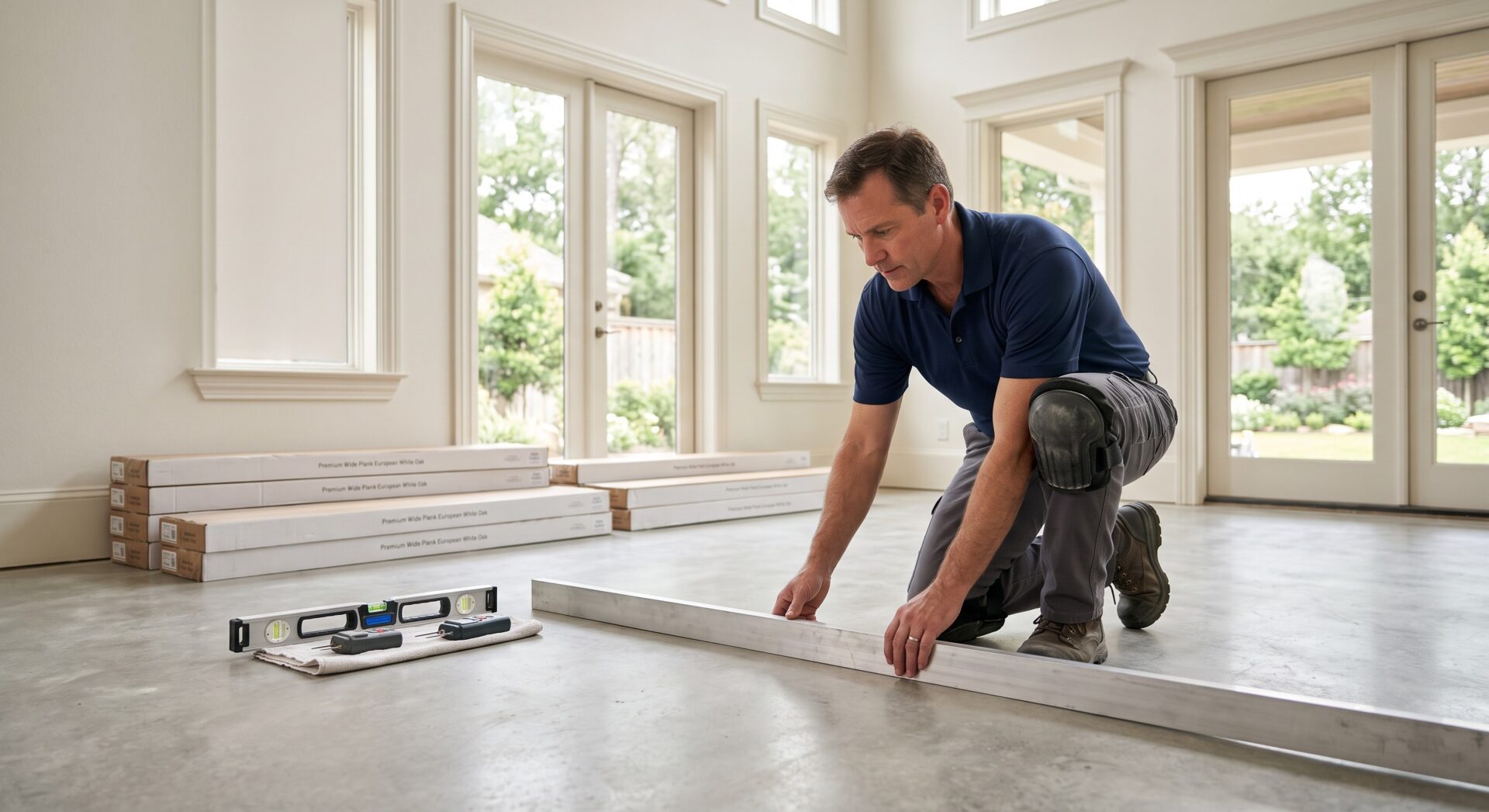
You can buy the most expensive hardwood, the highest-rated LVP, or the thickest SPC on the market. None of it matters if the person installing it skips the subfloor assessment, ignores the moisture test, or does not know how to handle a tricky door jamb transition. Installing hard surface flooring is a construction-type project, and the installer’s skill determines whether your investment lasts 20 years or fails in 20 months.
Houston homeowners face this risk more than most. The city’s expansive clay soils create slab movement that demands specific pre-installation assessments most DIY guides never mention. Choosing the right installer is not just about getting a fair price. It is about protecting a major investment in your home.
Key Takeaways
- Installing hard surface flooring is a construction-type project that requires professional assessment of job site conditions, subfloor flatness, and moisture levels.
- A qualified installer checks for deflection, baseboard heights, door jamb clearances, and product-specific limitations like stair suitability before opening a single box.
- Professional installers work to make the floor “flat,” not “level,” because achieving a perfectly level floor is nearly impossible in Houston homes due to soil movement and settling.
- Professional installers work to make the floor “flat,” not “level,” because achieving a perfectly level floor is nearly impossible in Houston homes due to soil movement and settling.
- DIY installation of hard surface flooring frequently leads to complications such as subfloor issues, improper transitions, and voided warranties.
- Shopping with a National Floorcovering Alliance (NFA) dealer ensures your installer adheres to manufacturer recommendations and industry standards.
What Makes Flooring Installation a Construction Project?
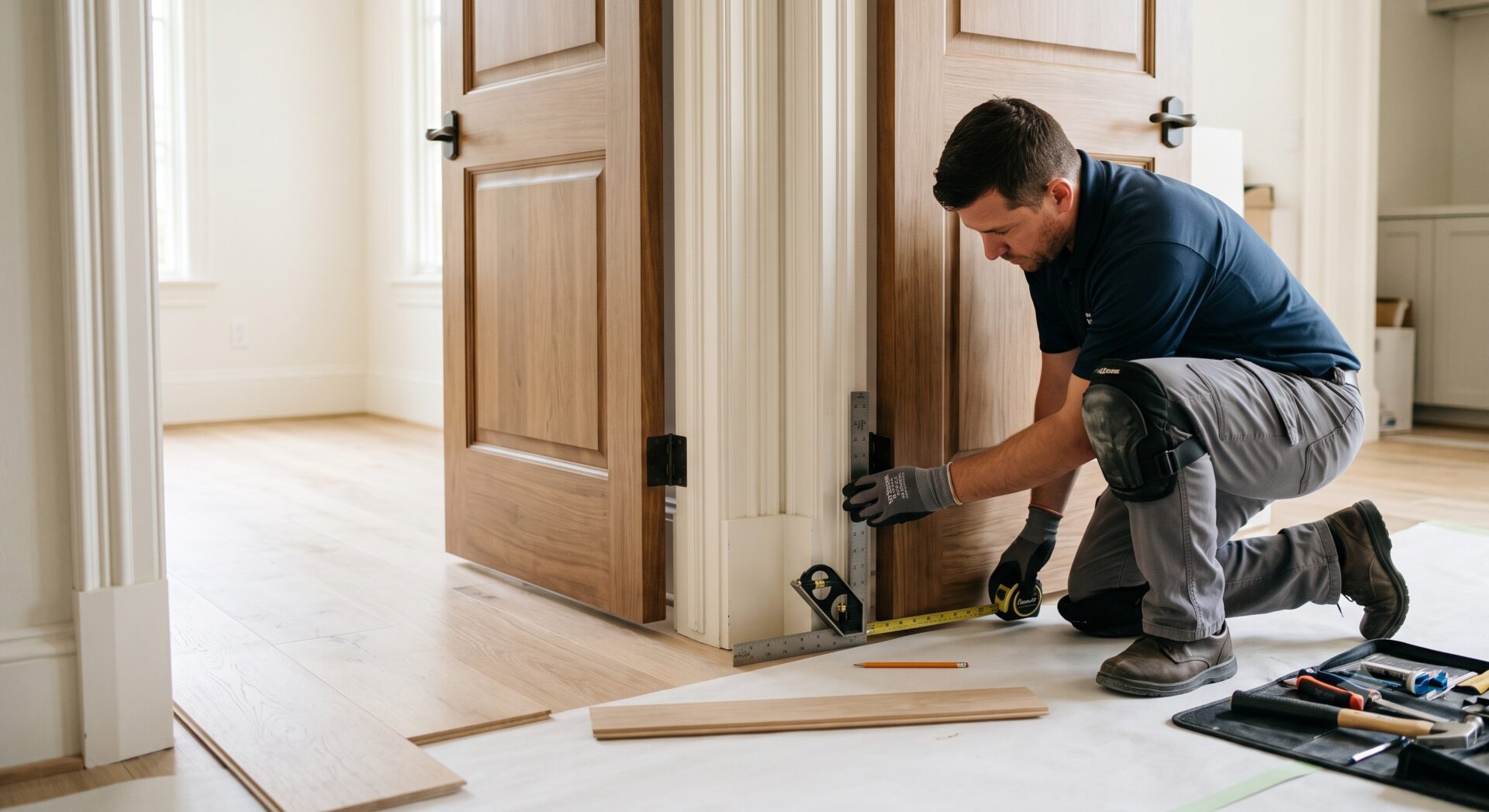
Hard surface flooring installation is not a weekend DIY task. It is a construction-type project that requires a professional to evaluate the entire job site before cutting the first plank. The installer must assess potential deflection in the subfloor, measure height adjustments for baseboards, and check door jamb clearances to ensure the new floor fits properly under every transition in the home.
Big-box stores promoted click-lock hard surface products as easy DIY solutions for years. The locking systems do snap together without glue, but the marketing left out every complication that happens before and around those planks. Consumers who attempt DIY installation often encounter subfloor issues they cannot diagnose, work themselves into corners, or discover too late that their product is not rated for stairs.
In Houston, these risks multiply. The city’s Lake Charles and Beaumont clay soils cause seasonal slab movement that creates uneven subfloors over time. Older ranch homes in Meyerland and 1920s bungalows in the Heights often have subfloor conditions that require professional correction before any flooring goes down.
What Should a Qualified Installer Check Before Starting?
A qualified installer performs a complete site assessment before opening a single box of product. This assessment includes subfloor flatness, moisture testing, deflection evaluation, baseboard and transition heights, and product-specific limitations.
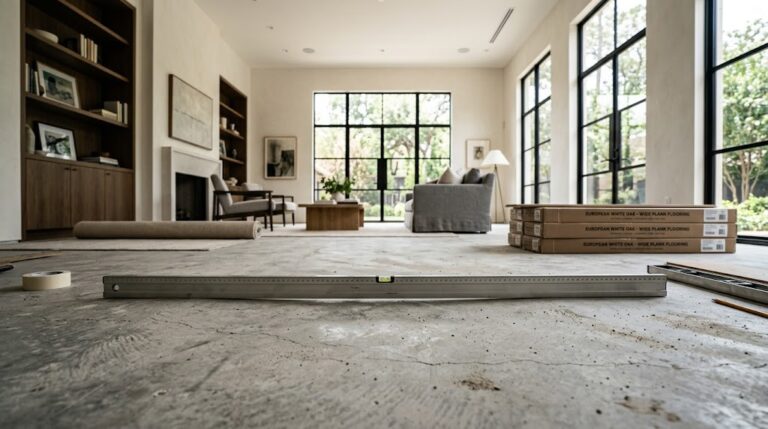
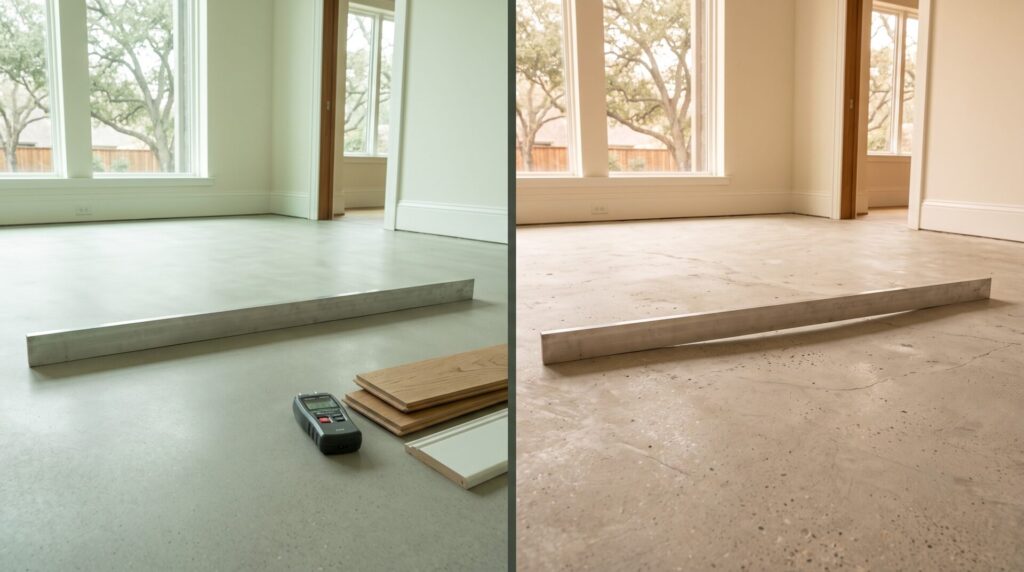
The subfloor must be sound and solid. A professional installer works to make the floor flat, recognizing that a perfectly level floor is nearly impossible due to house movement and settling over time. Flat means no high or low spots that would cause planks to rock, gap, or telegraph imperfections. Level means plumb with gravity, which is a different standard entirely.
“A qualified installer does not just lay planks,” says the Roberts Carpet & Fine Floors team. “They assess baseboards, door jambs, transition heights, and subfloor flatness before they open a single box. That is what separates a construction-level install from a weekend project.”
Product limitations matter too. Many click-lock LVP and laminate products are not rated for stair installations because they lack the structural support needed for nosing transitions. A professional installer identifies these limitations during the assessment, not after the product has been cut and attempted.
Why Is Houston’s Soil a Factor in Flooring Installation?
Houston’s expansive clay soils absorb water during wet seasons and shrink during drought. This cycle creates subtle but measurable slab movement that affects subfloor flatness. A slab that was flat when the home was built may have high and low spots years later that are invisible to the eye but obvious to a straightedge.
In newer subdivisions like those in the Energy Corridor and Cinco Ranch, builders pour slabs on freshly graded clay that has not fully settled. Slab movement in these homes can be more pronounced during the first five to ten years. A professional installer factors this into the installation plan and may recommend additional subfloor preparation to compensate.
Pro-Tip from the Roberts Carpet & Fine Floors Team: If you live in a Houston-area home built on expansive clay, ask your installer to check subfloor flatness with a 10-foot straightedge in multiple directions across every room. This step takes 15 minutes and can prevent thousands of dollars in post-installation problems.
What Questions Should You Ask Before Hiring an Installer?
You must trust both the retailer and the installer. The right questions to ask before signing a contract are specific and practical. Ask whether they perform pre-installation moisture testing and how they document the results. Ask how they assess subfloor flatness and what corrective measures they use when the slab is out of tolerance.
Ask how long they have installed the specific product type you selected. Ask whether they carry liability insurance. Ask for references from recent jobs similar to yours in terms of product type, square footage, and home age. A qualified installer will answer all of these without hesitation.
Red flags in a quote include: no mention of an in-person site visit, no moisture testing plan, vague warranty language, and a price that is dramatically lower than competitors. That low price usually means corners will be cut on preparation, and preparation is where your floor’s longevity lives.
“We have seen beautiful flooring ruined by an installer who skipped the moisture test and never checked the subfloor for deflection,” says the Roberts Carpet team. “The product was perfect. The installation destroyed it.”
Why Does Your Dealer Choice Affect Installation Quality?
Shopping with an NFA dealer gives you confidence that the installer assigned to your job meets manufacturer recommendations and industry standards. National Floorcovering Alliance (NFA) dealers are among the most knowledgeable independent flooring retailers in North America, and they stake their reputation on every installation they coordinate.
Roberts Carpet & Fine Floors has provided professional flooring installation across Greater Houston since 1984. Their installation teams handle the full scope of site assessment, subfloor preparation, and product-specific installation requirements. As Houston’s only NFA member, they stand behind every job with the accountability that only an independent, family-owned dealer can offer.
According to International Certified Flooring Installers (CFI), proper installation requires training specific to each product category. Carpet, hardwood, LVP, tile, and laminate each have distinct subfloor requirements, acclimation protocols, and transition methods. A dealer who matches the right installer to your specific product protects your investment from day one.
Visit any of our nine Houston-area showrooms or call (713) 523-0666 for a complimentary measure and turnkey quote within 48 hours.
Frequently Asked Questions
What should a professional flooring installer check before installation?
A qualified installer checks subfloor flatness and moisture levels, evaluates deflection, measures baseboards and door jamb clearances, and confirms the product is suitable
for the specific application. These assessments are required by manufacturers and protect your warranty.
What is the difference between a flat floor and a level floor?
Flat means the surface has no high or low spots that would cause planks to rock or gap. Level means the surface is perfectly plumb with gravity. Professional installers aim for flat because achieving perfectly level is nearly impossible in Houston homes due to soil movement and settling.
Can any flooring product be installed on stairs?
No. Many click-lock LVP and laminate products are not rated for stair installations because they lack the structural support needed for nosing transitions. A professional installer will identify these limitations before the job begins.
Why is DIY flooring installation risky for hard surface products?
DIY installers often encounter complications like subfloor issues they cannot diagnose, working themselves into corners, and skipping critical steps like moisture testing. These mistakes void warranties and frequently require costly professional correction.
What questions should I ask before hiring a flooring installer in Houston?
Ask whether they perform pre-installation moisture testing, how they assess subfloor flatness, whether they carry liability insurance, how long they have installed the specific product type you selected, and whether they can provide references from recent similar jobs in your area.
Why does Houston’s soil affect flooring installation?
Houston’s expansive clay soils cause seasonal slab movement that creates uneven subfloors. A qualified installer checks for deflection and flatness issues caused by this movement before beginning any installation.
This article is based on an expert interview with a flooring industry professional and reviewed for accuracy by the Roberts Carpet & Fine Floors team. Last updated June 18, 2026.