
- Blog
The Truth About “Waterproof” Flooring: What Houston Homeowners Need to Know
June 11, 2026
If you’ve shopped for flooring in the last few years, you’ve seen it plastered across showroom floors, retail websites, and manufacturer ads: waterproof. Luxury vinyl, SPC, WPC, laminate — even certain wood products now carry the label. It sounds like a homeowner’s dream, especially in Houston, where the humidity rarely lets up and memories of Harvey still linger.
But here’s what the flooring industry doesn’t always make clear: “waterproof” means something much more specific than most buyers realize. Understanding the difference between what that claim promises and what it actually covers could save you from a very expensive misunderstanding.
The Word “Waterproof” Has Been Oversold
The problem started with good intentions. Water-resistant flooring genuinely was a leap forward – surfaces that could handle spills, splashes, and pet accidents without warping or staining were a real improvement over older options. But somewhere along the way, the marketing got ahead of the reality. The term “waterproof” began to imply something stronger: that the floor was impervious, bulletproof, immune to water damage of any kind.
It isn’t.
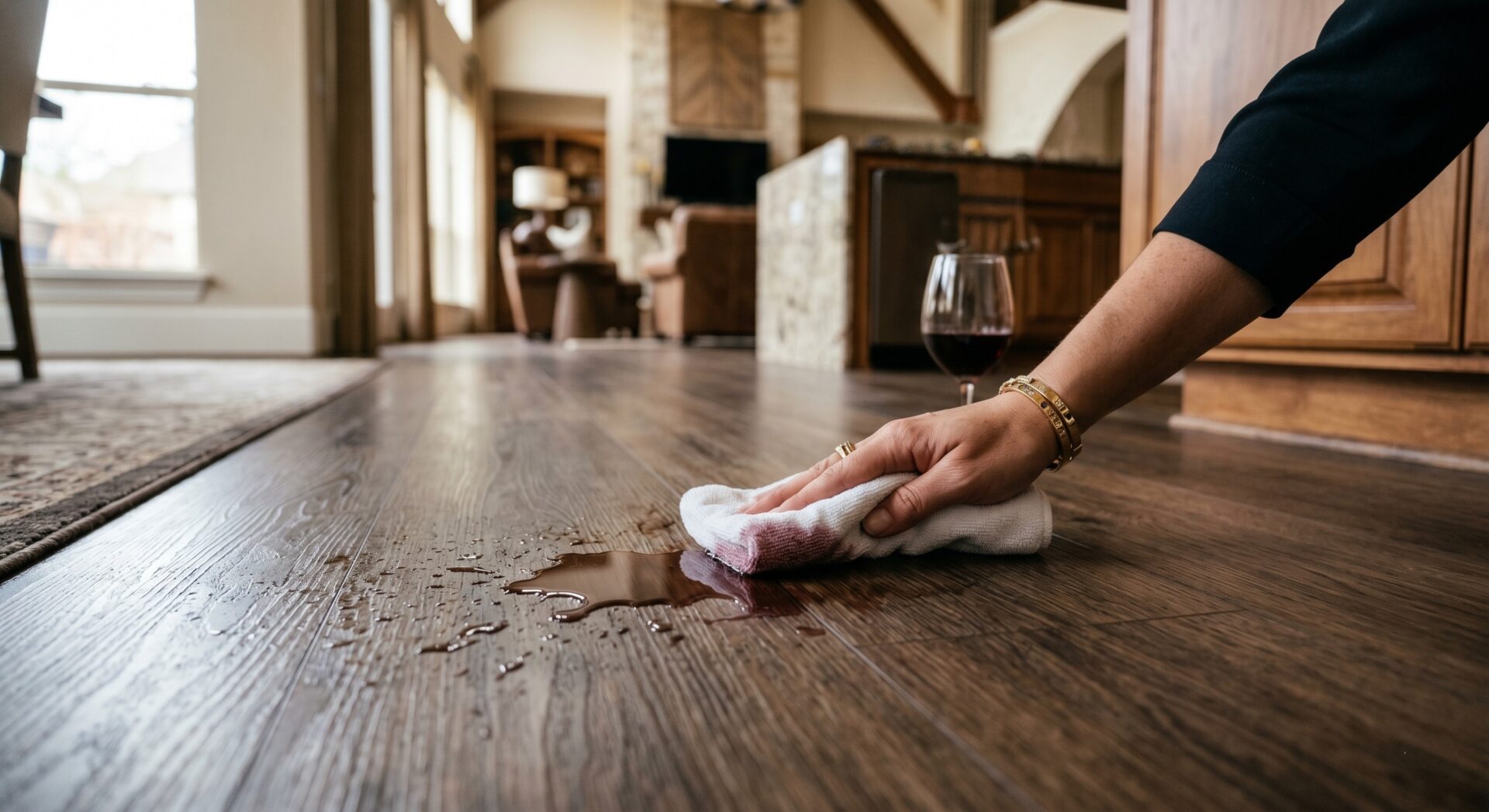
Products labeled as waterproof – including luxury vinyl tile (LVT), stone plastic composite (SPC), wood plastic composite (WPC), and many laminates – do offer meaningful water resistance. The core materials in these products won’t absorb moisture the way older laminate or solid hardwood would. That’s real. But “waterproof” as a warranty term refers specifically to topical water exposure: spills, drips, the occasional mop-water overflow. You clean it up, the floor is fine.
What it does not cover – and this matters enormously in Houston – is flooding.
What Happens When the Water Keeps Coming
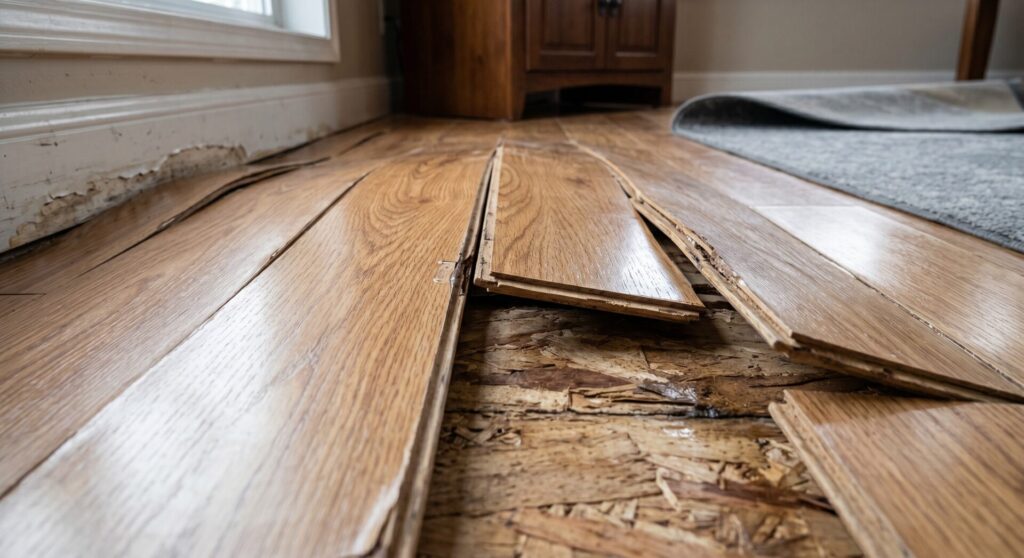
Here’s the mechanical reality: when water infiltrates a flooring system, it doesn’t just sit on top. It works its way into the joints between planks. And when it reaches the subfloor below, that subfloor absorbs it. In Houston’s clay-heavy soil environment, subfloors are already dealing with significant moisture pressure from below. Add flooding from above, and you have swelling from two directions.
Once the subfloor swells, the floor above it has nowhere to go. Planks buckle. Joints pop. The floor fails – and there is no manufacturer warranty that will cover it, regardless of how many times the word “waterproof” appeared on the box.
This isn’t a technicality hidden in fine print. It’s a fundamental misunderstanding of what the product was designed to do. Waterproof flooring was engineered to handle the realities of daily life. It was not engineered to survive a flood.
Reading a Waterproof Warranty the Right Way
Most hard surface flooring products sold today carry what’s called a “limited lifetime warranty.” That warranty covers manufacturing defects – things like delamination, finish bubbling, or structural failure under normal use. The “waterproof” portion covers topical water: if a spill soaks through a joint momentarily, the floor should still perform. That’s a legitimate and useful protection.
What falls outside that warranty every time:
- Flooding or standing water of any duration
- Subfloor failure caused by water infiltration
- Moisture migration from below – particularly relevant in Houston, where slab-on-grade construction and expansive clay soils create upward moisture pressure
- Improper installation that compromises the floor’s ability to handle water contact at all
You can review how manufacturer warranties work at Roberts Carpet’s warranty resource page – a useful reference before you commit to any product.
Houston homeowners have unique exposure here. The city’s subtropical climate means average humidity stays elevated all year. Summers regularly push into ranges that stress flooring systems even without a single spill. And in neighborhoods like Meyerland or areas near Brays Bayou, flood risk is a real annual conversation – not a distant hypothetical.
How to Shop Smarter for Water-Resistant Flooring in Houston
The goal isn’t to avoid LVP or SPC – these are genuinely excellent products for the right applications. The goal is to buy them with accurate expectations and proper installation.
Match the product to the risk level. For most main living areas, an SPC or WPC luxury vinyl in the 6-8mm range gives you solid daily water resistance without overpaying for capability you don’t need. For areas with higher moisture exposure – laundry rooms, bathrooms, spaces near exterior doors – installation method and substrate preparation matter as much as the product itself.
Understand what the floor sits on. In Houston, subfloor condition is everything. A waterproof floor installed over a compromised or moisture-saturated subfloor is only as good as what’s underneath it. A professional installer will assess moisture levels before laying a single plank.
Ask about the warranty before you buy. Any reputable flooring specialist should be able to walk you through exactly what the manufacturer covers – and what they don’t. If the answer is vague, that’s a signal worth noting.
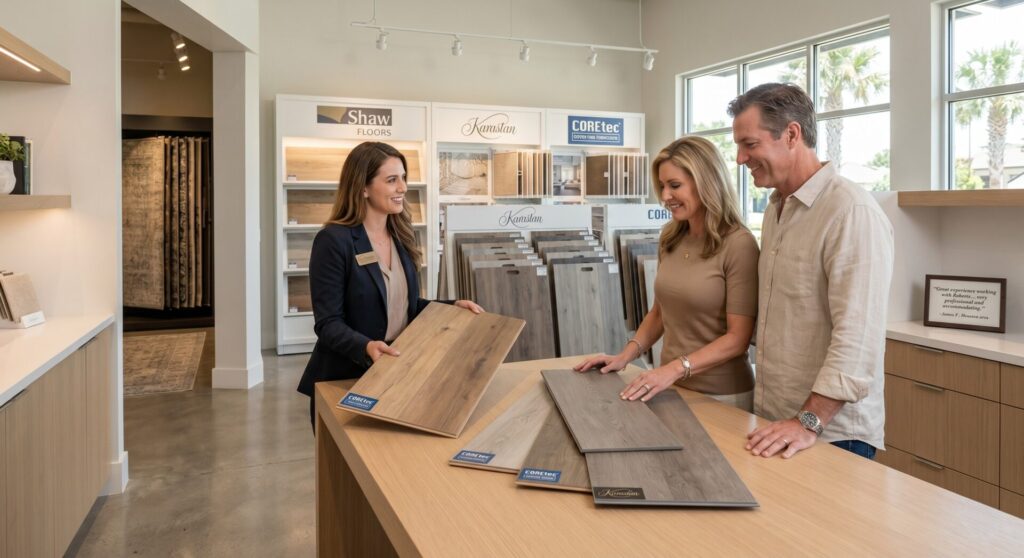
At Roberts Carpet & Fine Floors, our team helps Houston homeowners navigate these decisions every day. We carry luxury vinyl options from trusted brands including COREtec, Shaw Floors, and Karastan – and we’ll explain what you’re actually buying before you commit.
“Great experience working with Roberts… very professional and accommodating.” – James F., Houston area
Why It Matters Where You Buy
When something goes wrong with a floor, you want a retailer who will stand behind what they sold you. As a member of the National Floorcovering Alliance, Roberts Carpet is part of an elite group of independent dealers that holds itself to a higher standard – not just on product quality, but on accountability after the sale. That means our team works through problems with you, whether a manufacturer approves a claim or not.
In a city with Houston’s weather history, that kind of post-sale support isn’t a luxury. It’s part of what you’re paying for.
Frequently Asked Questions
Is luxury vinyl flooring really waterproof?
Luxury vinyl is water-resistant to topical water exposure – meaning spills and everyday moisture. The waterproof warranty covers surface contact. It does not protect against flooding, standing water, or moisture migrating up from below the floor.
What voids a waterproof flooring warranty?
Most waterproof flooring warranties are voided by flooding or standing water, improper installation, subfloor failure, and moisture migrating upward from below the slab. Always read the specific manufacturer warranty before purchasing.
Can I install waterproof flooring in a flood-prone area of Houston?
You can, but with realistic expectations. No currently available flooring product is designed to withstand flooding. In flood-prone areas, focus on products that are easy to replace, and prioritize a properly prepared subfloor and adequate drainage.
Why does subfloor preparation matter so much in Houston?
Houston sits on expansive clay soils with high moisture content. Slabs and subfloors in this climate face moisture pressure from below. A compromised or improperly prepared subfloor will transfer that moisture upward – even if the floor above it is marketed as “waterproof.”
What’s the difference between SPC and WPC luxury vinyl?
Both are rigid-core luxury vinyl formats. SPC (Stone Plastic Composite) uses a denser, harder core that resists denting and performs well under heavy traffic. WPC (Wood Plastic Composite) has a slightly softer core and often feels more comfortable underfoot. For Houston’s climate, both are strong performers – the right choice depends on your traffic level, room size, and subfloor conditions.
Ready to find the right water-resistant flooring for your Houston home? Stop by any of our ten Greater Houston showrooms or book a complimentary estimate online. Our team will walk you through your options honestly – no overselling, no fine-print surprises.