
- Uncategorized
What Does a Flooring Warranty Actually Cover in Houston?
July 17, 2026
Every flooring product sold in Houston comes with a warranty. Most Houston homeowners assume that warranty protects them from just about anything, especially when the box says “waterproof.” That assumption is wrong, and it costs families thousands of dollars every year when a claim gets denied and they have no idea why.
The flooring industry created this problem by over-promoting the word “waterproof” across LVP, SPC, WPC, laminate, and even some wood products. That marketing blitz convinced consumers that their floors are indestructible. They are not. Understanding what your warranty actually covers, and what it quietly excludes, is the single most important step you can take before buying new floors.
Key Takeaways
- Flooring warranties typically cover manufacturing defects like delamination and bubbles in the finish, not damage from everyday use, flooding, or improper installation.
- “Waterproof” warranties cover topical water only, meaning spills you clean up promptly. They do not cover flooding or long-term water exposure.
- If a floor floods, water penetrates the joints and causes the subfloor to swell, which guarantees failure that no warranty will cover.
- Shopping with a National Floorcovering Alliance (NFA) dealer gives you an advocate who will work on your behalf when a claim is filed, whether the manufacturer approves it or denies it.
- Houston’s high humidity and expansive clay soils make proper pre-installation moisture testing essential. Skipping it can void your warranty before you even move furniture back in.
What Does “Waterproof” Actually Mean on Flooring?
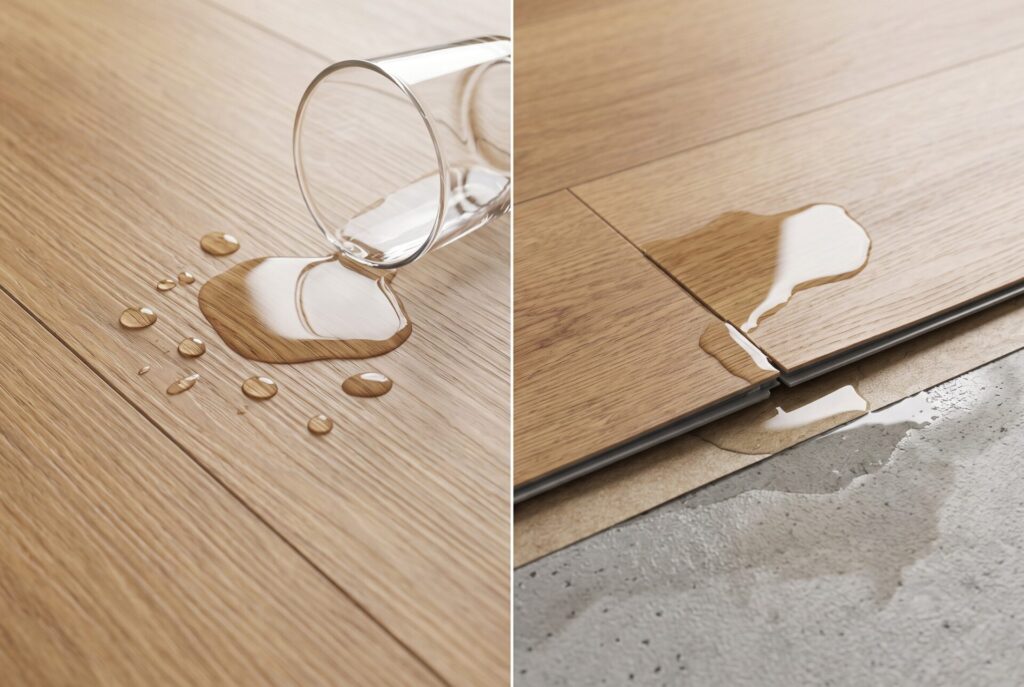
“Waterproof” on a flooring label means the product itself will not absorb topical water. Spill a glass of water, clean it up within a reasonable time, and the planks or tiles will be fine. That is the full extent of what the waterproof claim covers.
The confusion starts when homeowners extend that promise to situations the manufacturer never intended. A waterproof SPC plank will survive a kitchen spill. It will not survive a burst pipe that sends water across the room for eight hours. The distinction between topical water and standing water or flooding is the most misunderstood concept in residential flooring today.
“We tell every customer the same thing: your waterproof warranty covers the glass of water your kid knocks over,” says the Roberts Carpet & Fine Floors team. “It does not cover the pipe that bursts while you’re on vacation. That distinction matters, and a good dealer makes sure you understand it before you sign.”
What Do Flooring Warranties Typically Cover?
Most hard surface flooring warranties are limited lifetime warranties that cover manufacturing defects. Delamination, bubbles in the finish, structural failure of the locking system, and color variation beyond acceptable range all fall under this category.
The key word is “manufacturing.” Your warranty protects you from something the factory got wrong. It does not protect you from damage caused by water, impact, UV exposure, or improper installation. Those exclusions are where most warranty claims die.
Flooring warranties fall into two categories. The structural warranty covers the physical integrity of the product. The finish warranty covers the wear layer and surface coating. Both have specific conditions you must meet, and both have exclusions that most homeowners never read until they need to file a claim.
Why Does Houston’s Climate Make Warranties Riskier?
Houston sits on expansive clay soils, primarily the Lake Charles and Beaumont clay series. These soils absorb moisture during the wet season and shrink during dry spells, creating seasonal slab movement that most homeowners never notice until their floors start gapping or cupping.
With an annual average humidity of 75% and summer peaks that routinely push past 85% outdoors, Houston creates conditions that stress every flooring product differently. Wood expands. LVP can telegraph subfloor imperfections. Laminate edges can swell if moisture migrates through an untreated slab.
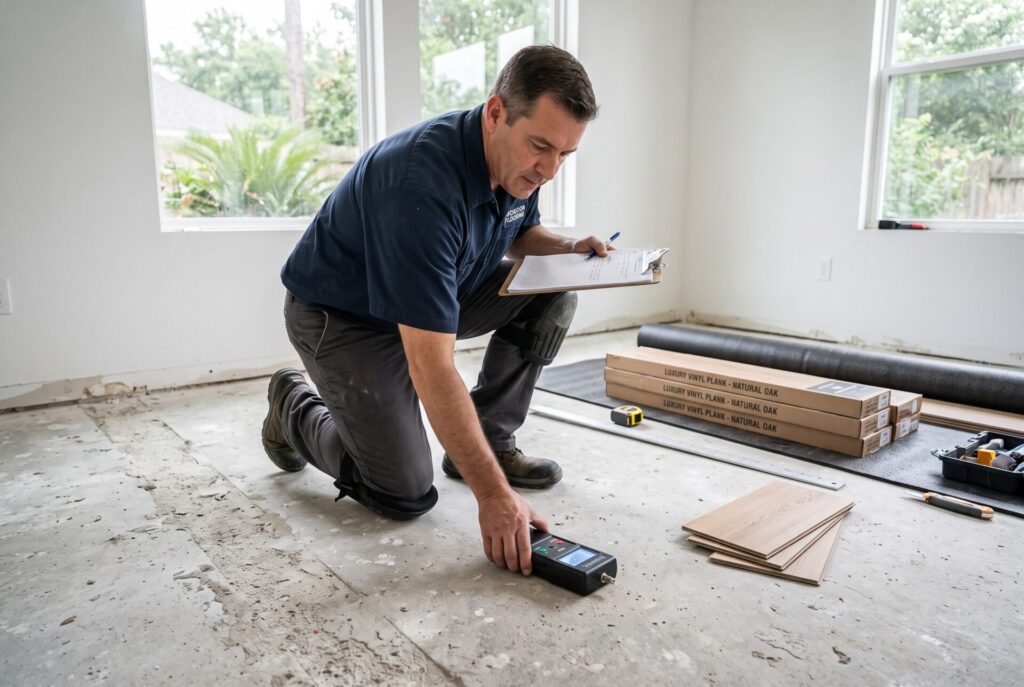
Here is the warranty problem: most manufacturers require pre-installation moisture testing of the subfloor. If your installer skips that step and your floor fails six months later, the manufacturer will point to the lack of documentation and deny the claim. In neighborhoods like Memorial Villages, where older slab-on-grade construction is common, and in Cinco Ranch, where newer slabs on expansive clay are the norm, pre-installation moisture testing is not optional.
Pro-Tip from the Roberts Carpet & Fine Floors Team: In Houston, we consistently see elevated slab moisture readings in homes near Buffalo Bayou and in low-lying areas of Fort Bend County. Before we install any hard surface flooring, we run a full moisture assessment and document the results. That documentation protects you if you ever need to file a warranty claim.
What Happens When a Floor Floods?
If your floor floods, water will penetrate the joints between planks and reach the subfloor. The subfloor swells. The planks buckle, warp, or delaminate from below. This is a guarantee of failure, and it is not covered by any standard flooring warranty.
This is true for LVP, SPC, WPC, laminate, and engineered hardwood. The product on top may technically be waterproof, but the system underneath it is not. Your subfloor, your underlayment, and the adhesive or locking mechanism all have moisture limits.
The flooring industry’s heavy promotion of “waterproof” has created a dangerous consumer misconception. Homeowners hear “waterproof” and believe their floor is flood-proof. Those are two very different things, and understanding the difference before a weather event or plumbing failure hits is critical.
How Do You Protect Your Warranty After Installation?
Protecting your warranty starts before the first plank goes down. A professional installer assesses job site conditions, tests subfloor moisture, checks for deflection, and confirms that baseboards, door jambs, and transitions will accommodate the new floor. These steps are not extras. They are manufacturer requirements, and skipping any of them can void your coverage.
After installation, follow the manufacturer’s care instructions exactly. Use only approved cleaning products. Maintain indoor humidity between 30% and 50% year-round, which in Houston means running your HVAC consistently through the summer months. Keep documentation of your purchase, your installer’s credentials, and your pre-installation moisture test results. According to the World Floor Covering Association (WFCA), keeping these records is the single best thing a homeowner can do to support a future warranty claim.
Your subfloor must be sound and solid before anything goes on top of it. A professional installer works to make the floor flat, recognizing that a perfectly level floor is nearly impossible in Houston due to house movement and soil settling over time.
Why Does It Matter Where You Buy Your Flooring?
Shopping with a National Floorcovering Alliance (NFA) dealer gives you something no big-box store can match: an advocate. When a warranty claim gets filed, an NFA dealer works with you and the manufacturer to find a resolution, whether the claim is approved or denied.
NFA dealers represent fewer than one-tenth of one percent of all flooring retailers in North America. They are selected based on volume, reputation, and a commitment to customer service that goes beyond the sale. A negative flooring experience does not just affect one room. It affects your trust in the entire process, and NFA dealers understand that their reputation depends on how they handle problems, not just how they make sales.
Roberts Carpet & Fine Floors, Houston’s only NFA member, has served the Greater Houston area since 1984. With ten showrooms and professional installation teams, they handle everything from product selection to post-installation support.
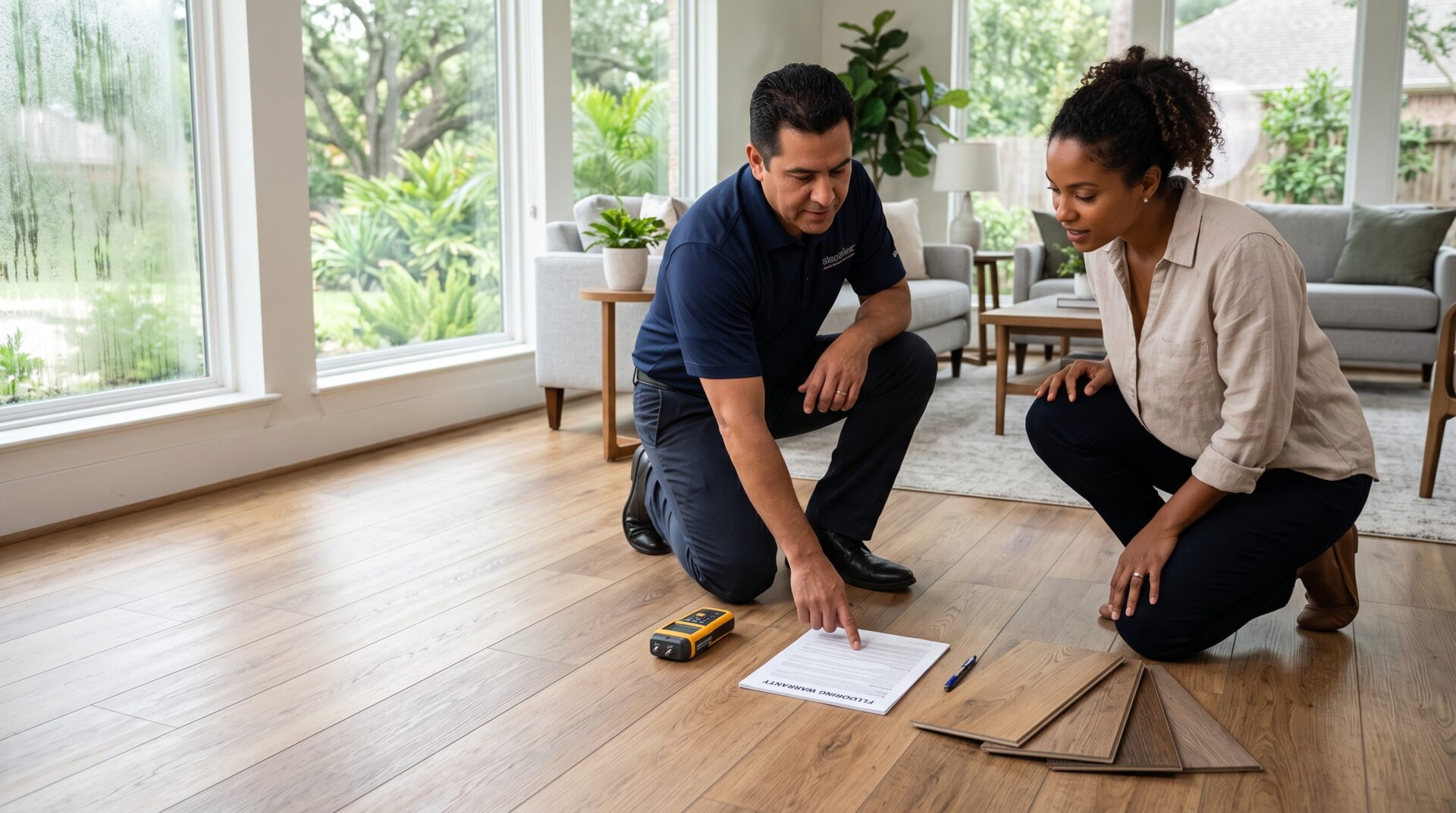
“When a manufacturer denies a claim, most big-box stores hand you a phone number and wish you luck,” says the Roberts Carpet team. “We sit down with you, review the paperwork, and work with the vendor on your behalf. That is what being an NFA dealer means.”
Visit any of our ten Houston-area showrooms or call (713) 523-0666 for a complimentary measure and turnkey quote within 48 hours.

Frequently Asked Questions
Does “waterproof” flooring mean my warranty covers flooding?
No. Waterproof warranties cover topical water, meaning spills you clean up within a reasonable time. Flooding, standing water, and long-term water exposure are excluded from standard flooring warranties.
What manufacturing defects does a flooring warranty cover?
Most warranties cover defects like delamination, bubbles in the finish, and structural failure of the locking system. They do not cover damage from impact, UV exposure, moisture from below the subfloor, or improper installation.
Can improper installation void my flooring warranty?
Yes. If your installer did not follow manufacturer guidelines, including moisture testing the subfloor and maintaining proper expansion gaps, the manufacturer can deny your claim. Always use a qualified professional installer.
Does waterproof flooring warranty cover flooding?
No. If a floor floods, water penetrates the joints and reaches the subfloor. The subfloor swells, causing planks to buckle or warp. This failure is not covered by any standard waterproof flooring warranty.
Why does buying from an NFA dealer protect my warranty?
An NFA dealer acts as your advocate if a warranty issue arises. They work directly with manufacturers on your behalf, regardless of whether a claim is approved or denied. Big-box stores typically cannot offer this level of post-sale support.
How does Houston’s humidity affect my flooring warranty?
Houston’s 75% average annual humidity creates moisture conditions that stress flooring products. If your installer did not test subfloor moisture before installation and document
the results, the manufacturer may deny a future claim based on improper installation conditions.
This article is based on an expert interview with a flooring industry professional and reviewed for accuracy by the Roberts Carpet & Fine Floors team. Last updated June 18, 2026.